A 20 kW solar system can produce substantial electricity, but its price is not one fixed number. The 20 Kw Solar System Price in 2026 depends on location, equipment, labor, roof or ground conditions, and whether battery storage is included. A quote for a sunny, simple roof may look very different from one involving long cable runs, structural work, or limited site access. Details matter.
This guide explains what a 20 kW system may cost and how to compare quotes with care. It looks at panels, inverters, mounting hardware, installation, permits, monitoring, and optional batteries. It also separates equipment costs from the complete installed price, since headline figures can leave out important work. Ask what is included. Check warranty terms, expected production assumptions, and service arrangements, not just the total at the bottom of a proposal. Local electricity rates, shading, roof direction, and daytime energy use can change the system’s practical value. A larger system is not automatically the better choice. For example, a household that uses most of its electricity after sunset may value storage differently from a business with heavy daytime demand.
Prices and incentives can change during 2026, and supplier estimates may use different assumptions. Treat broad ranges as planning references, not guaranteed offers. Even careful guides cannot replace a site assessment. The awkward part is that a neat price comparison rarely captures every constraint. Use the sections ahead to identify those gaps, prepare useful questions, and judge whether a quoted 20 kW system fits your property and energy needs.
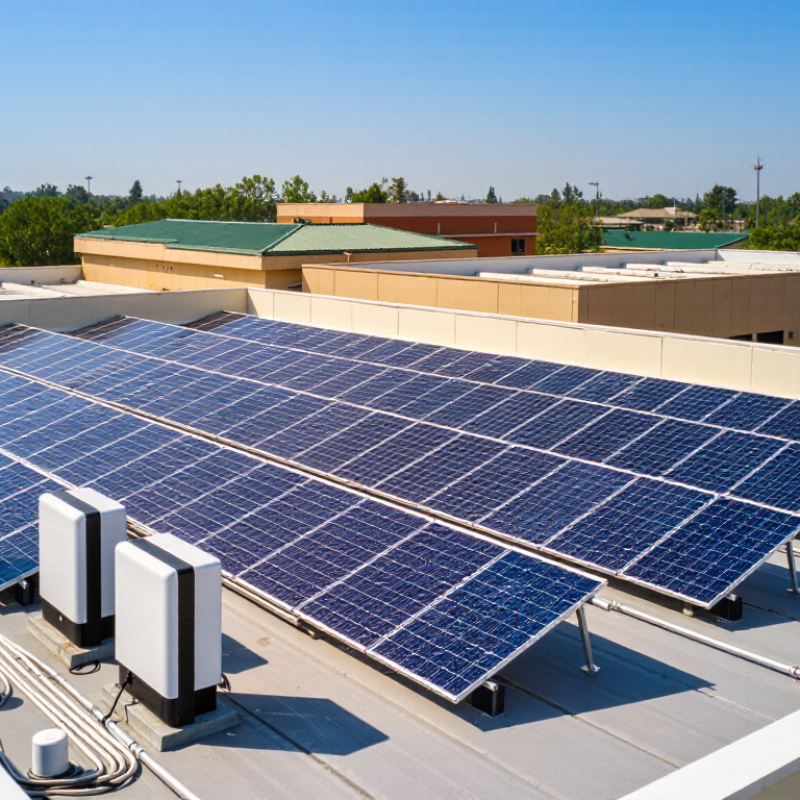
A 20 kW solar system is rated to produce up to 20 kilowatts of direct-current power under standard test conditions. It does not deliver that amount every hour. For example, fifty 400-watt panels add up to 20 kW, though the final panel count depends on equipment size. That is the system’s capacity, not its daily energy output.
Sunlight creates direct-current electricity in the panels. An inverter converts it into alternating current, which can run lights, refrigerators, pumps, and other connected loads. When production exceeds use, surplus power may charge a battery or flow to the grid, depending on the system setup. When clouds pass or evening arrives, the grid or stored energy can fill the gap. Briefly, capacity and energy are different. Kilowatts describe power; kilowatt-hours measure energy over time.
Actual output depends on sunlight, roof direction, shading, temperature, and equipment choices. A branch casting shade across just a few panels can affect production more than a simple estimate suggests. Before sizing a system, a qualified professional should review the roof, electrical service, and recent electricity bills. A design can look perfect on paper and still need adjustment after a site visit. That uncertainty is worth discussing openly.
A 20 kW solar system is best specified by its DC panel capacity and AC inverter output; these are not always the same. A practical baseline. Forty 500-watt modules make a 20 kW DC array. At roughly 2.2 square metres per module, the panels alone occupy about 88 square metres. Allow extra roof space for access, edges, and shading.
NREL’s 2023 U.S. Solar Photovoltaic System and Energy Storage Cost Benchmark models an 8 kW DC residential array with a 7.6 kW AC inverter. That benchmark illustrates why buyers should compare both ratings, not just the headline kilowatts. For a 20 kW DC design, an inverter near 19 kW AC is one possible configuration; final sizing depends on local grid rules and the site’s production profile. This neat arithmetic can mislead.
Typical systems pair modules with mounting rails, DC wiring, protective equipment, an inverter, and monitoring. A string inverter is common; multiple strings can help accommodate different roof faces, though shade may reduce output across a string. Battery storage is optional, not an automatic match for a 20 kW array. Size it around evening use and desired backup duration. IEA PVPS reports that global PV capacity continued expanding rapidly in its 2024 Snapshot, but broad market growth does not guarantee a good fit on one roof. Ask for a site-specific layout and yield estimate. Include cable routes and service access. Details matter.
A typical U.S. 20 kW grid-tied solar system without battery storage is estimated at $40,000–$60,000 before incentives. The chart shows indicative component and installation cost ranges in USD; actual quotes vary by location, roof design, equipment choices, and project requirements.
Typical configurations: Grid-tied systems connect to the utility and generally have no battery. Hybrid systems add battery storage for backup power, while off-grid systems typically require more storage and may need a generator. Storage and backup equipment are not included in the chart.
A practical 2026 planning range for a 20 kW rooftop solar system is about $50,000–$65,000 before incentives, excluding batteries. This is a budgeting estimate, not a guaranteed market quote. The EnergySage 2024 Solar & Storage Marketplace Report put the average quoted residential price at $2.80 per watt in the second half of 2023. Applied directly, that benchmark equals about $56,000 for 20 kW. Larger systems may have different per-watt pricing, so the calculation is only a reference. Real roofs differ. Installation costs can rise with steep tiles, long cable runs, a crowded electrical panel, or local labor rates. A site assessment is more useful than a headline price.
Tips: Ask for an itemized quote showing panels, inverter, labor, and electrical work. Compare the system size and equipment assumptions, not only the total. Check whether battery storage is included; it can change the budget substantially.
Before settling on a price, confirm the system’s expected annual production using your roof direction, shading, and local sunlight data. A 20 kW system may not suit every home, even when the roof looks large. I would treat any single 2026 figure with caution: equipment costs and installation conditions can change, and published marketplace averages describe past quotes, not future guarantees.
A 20 kW system’s installed price depends on more than panel count. Roof condition, mounting type, local labor rates, permits, and utility connection work can shift the quote. A steep roof with several vents takes longer to lay out than a clear, low-slope roof. Older wiring may also need upgrades. Small details add up.
NREL’s Q1 2023 U.S. photovoltaic cost benchmark estimated modeled costs of about $2.90 per watt for residential systems and $1.64 per watt for commercial rooftop systems. These figures are useful reference points, not fixed prices for a 20 kW project. System scale, site conditions, and market timing matter. Storage adds equipment and installation work; shading can require extra design or electrical components. Ask installers to itemize panels, inverters, mounting, labor, permits, and any roof or electrical repairs. Compare the same system scope, not just the headline total. That is where quotes can mislead. Costs change, and benchmark data cannot replace a site-specific assessment.
A 20 kW solar system is a substantial installation, so the quoted price should reflect more than panels and inverters. Ask for a clear breakdown of equipment, labor, electrical upgrades, mounting, and any site-specific work. A roof inspection matters. Installers should assess roof condition, shading, and available space before estimating output. Around 50 panels rated at 400 watts could make up 20 kW, though panel sizes and layouts vary. That footprint may not fit every roof.
Annual production depends on local sunlight, roof direction, tilt, shade, and system losses. As a broad estimate, a well-sited 20 kW system might generate roughly 20,000 to 30,000 kWh per year. Weather shifts everything. Request an estimate based on your address and ask how it accounts for seasonal changes. Payback depends just as much on how much energy you use while the system is producing. A household that runs daytime equipment may use more solar directly; exported power may be credited at a different rate. That gap matters. Compare the installed cost with realistic bill savings, maintenance assumptions, and available incentives, then test the estimate against lower production. I would not treat a single payback figure as a promise. Small changes in tariffs or usage can move it by years.
| Category | Metric | Typical 2026 Estimate | Notes and Considerations |
|---|---|---|---|
| System overview | Nominal system capacity | 20 kW DC | Actual AC output depends on inverter sizing, temperature, orientation, shading, and local grid requirements. |
| System overview | Typical panel count | About 37–50 panels | Illustrative range for modules rated approximately 400–550 W each; the exact count depends on module wattage. |
| System overview | Approximate roof area | About 1,100–1,600 sq. ft. of usable roof space | Required space varies with panel dimensions, roof layout, fire setbacks, access paths, and mounting design. |
| Installed price | Typical gross installed cost | Approximately $40,000–$60,000 USD | A broad planning range before incentives; local labor, equipment, roof conditions, permitting, and project complexity affect quotes. |
| Installed price | Indicative price per watt | Approximately $2.00–$3.00/W | Calculated from the gross system cost divided by 20,000 W; compare written quotes with equivalent scope and equipment. |
| Installation | Typical project timeline | Several weeks to a few months from contract to permission to operate | Design, permitting, utility approval, equipment availability, and inspections can affect the schedule. |
| Installation | Potential extra project costs | Roof repairs, electrical upgrades, trenching, or structural work: project-specific | These items may be excluded from a standard solar quote. Confirm exclusions and any required upgrades before signing. |
| Energy output | Broad annual production range | About 22,000–34,000 kWh per year | Equivalent to roughly 1,100–1,700 kWh per installed kW annually; site-specific production should be modeled using local weather and system design. |
| Energy output | Lower-production location example | 22,000–26,000 kWh per year | Illustrative for less sunny conditions or sites with less favorable orientation; shade can reduce output further. |
| Energy output | Mid-range production example | 26,000–30,000 kWh per year | Illustrative planning range for a reasonably sunny site with a suitable, minimally shaded array. |
| Energy output | Higher-production location example | 30,000–34,000 kWh per year | Possible at high-solar-resource sites with favorable orientation and limited shading; not a guaranteed output. |
| Payback example | Lower-production scenario | Gross cost: $50,000–$60,000; annual value: about $2,600–$4,200; simple payback: about 12–23 years | Uses 22,000–26,000 kWh/year and an assumed realized electricity value of $0.12–$0.16/kWh. |
| Payback example | Mid-range scenario | Gross cost: $44,000–$54,000; annual value: about $4,200–$6,600; simple payback: about 7–13 years | Uses 26,000–30,000 kWh/year and an assumed realized electricity value of $0.16–$0.22/kWh. |
| Payback example | Higher-production, higher-value scenario | Gross cost: $40,000–$50,000; annual value: about $6,000–$9,500; simple payback: about 4–9 years | Uses 30,000–34,000 kWh/year and an assumed realized electricity value of $0.20–$0.28/kWh. This favorable scenario is not typical of every market. |
| Payback considerations | Net-metering and export compensation | Varies by utility and local rules | Electricity exported to the grid may be credited at less than the retail rate, lowering the value of production not used on-site. |
| Payback considerations | Battery storage | Not included in the price or payback examples above | A battery can increase self-consumption and provide backup power, but adds upfront cost and may change the system’s payback. |
| Payback considerations | Incentives and taxes | Not deducted from the illustrative costs or payback figures | Incentive availability and eligibility depend on current law, ownership, location, and project details; verify applicable rules with a qualified tax professional. |
| Planning assumption | Scope and calculation basis | Illustrative U.S. residential-market estimates in USD | Estimates exclude battery storage, financing costs, ongoing maintenance, electricity-price changes, and incentives. Simple payback equals gross installed cost divided by estimated annual bill value. |
It often refers to the panels’ DC capacity. The inverter’s AC output may be lower. Compare both ratings.
Forty 500-watt panels make a 20 kW DC array. At about 2.2 square metres each, the panels cover roughly 88 square metres. Allow extra space for edges, access, and shade.
An inverter near 19 kW AC is one possible match. Final sizing depends on local grid requirements and the site’s production pattern. Neat arithmetic can mislead.
Systems typically include panels, mounting rails, DC wiring, safety equipment, an inverter, and monitoring. Multiple strings can suit different roof faces, but shade may reduce output.
No. Battery storage is optional. Size it around evening electricity use and the backup duration you want. It adds equipment and installation costs.
A planning estimate is about $50,000–$65,000 before incentives and without batteries. A past average of $2.80 per watt suggests about $56,000, but it is only a reference. It may not match your roof.
Steep tiles, roof repairs, long cable runs, an older electrical panel, permits, and local labor rates can increase costs. Small details add up.
Ask for itemized prices for panels, inverter, labor, electrical work, permits, and repairs. Check that each quote describes the same system size and battery scope.
Request a site-specific layout and annual production estimate using roof direction, shade, and local sunlight. A large roof alone is not enough. Double-check the assumptions.
A 20 kW solar system is a sizable photovoltaic setup that converts sunlight into electricity for homes, farms, or small businesses with substantial energy needs. This guide explains how the system works and introduces its main components, including solar panels, an inverter, mounting equipment, wiring, and optional battery storage. Typical configurations vary according to roof or ground space, electricity usage, and whether the system is connected to the grid or designed to provide backup power.
The 20 Kw Solar System Price in 2026 depends on equipment choices, installation complexity, local labor rates, permitting, and the inclusion of batteries. The guide outlines how to assess estimated costs and compare quotes, while also considering installation timelines and expected energy production. Understanding local sunlight conditions and electricity consumption can help estimate bill savings and payback time. These factors provide a practical framework for deciding whether a 20 kW system fits a property’s energy goals and budget.

YouthPOWER