A 48V Energy Storage System Company designs, assembles, or supplies battery systems built around a nominal 48-volt architecture. Its work may include battery modules, a battery management system, inverter compatibility, installation guidance, and ongoing technical support. The voltage alone tells you little. Cell chemistry, usable capacity, communications, and operating limits matter just as much.
The market is growing quickly. The International Energy Agency’s 2024 report, Batteries and Secure Energy Transitions, states that global battery storage capacity additions in the power sector reached about 42 gigawatts in 2023, more than 130% above 2022. That figure covers battery storage broadly, not the 48-volt segment specifically. The distinction matters. It prevents a global growth statistic from being mistaken for proof that every 48-volt product or supplier is dependable.
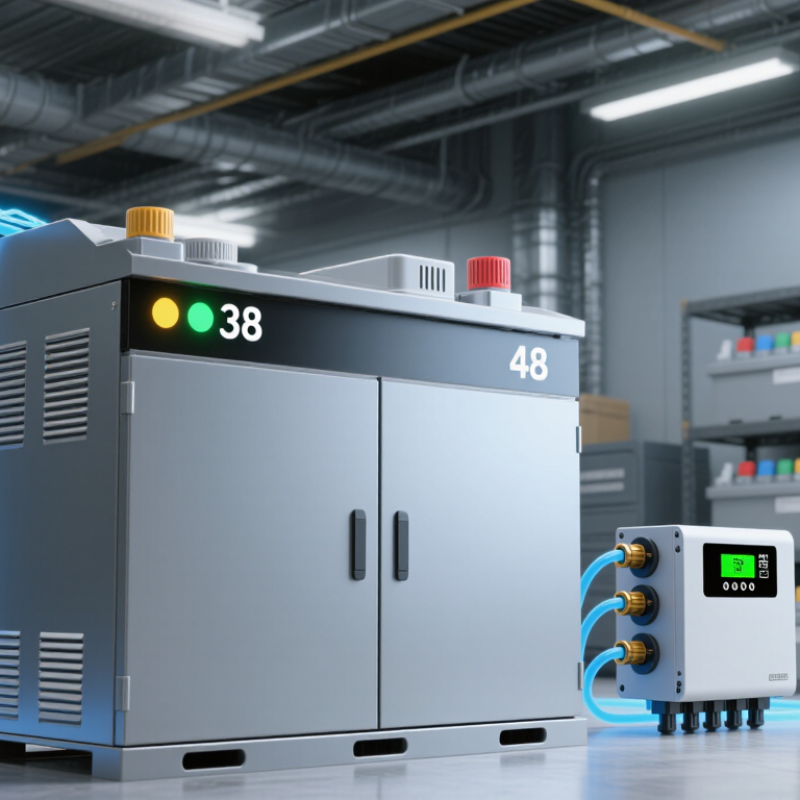
For homeowners and businesses, a practical evaluation starts with the equipment in front of them: a battery cabinet, its rated capacity, a compatible inverter, and clear warranty terms. Ask how the company tests its systems and handles service when something fails. A polished specification sheet is not enough. Real-world performance depends on installation, load patterns, temperature, and integration quality. Some details are easy to overlook. This article explains what defines a 48V Energy Storage System Company, which capabilities to assess, and what questions help separate proven expertise from vague claims.
What Is a 48V Energy Storage System Company?
What Defines a 48V Energy Storage System Company and Its 51.2V LFP Products?
A 48V energy storage system company designs or supplies batteries and related controls for low-voltage storage applications. Its work may include cell selection, pack assembly, battery management systems, testing, and technical support. In many lithium iron phosphate (LFP) products, “51.2V” describes a nominal voltage from sixteen cells connected in series. The 48V label is a common system category, not necessarily the battery’s exact operating voltage.
A capable supplier explains usable capacity, continuous current limits, protection functions, and expected operating conditions. It should provide clear specifications and explain how the battery communicates with a compatible inverter. Ask about over-temperature protection and charging limits, too. These details matter in a garage, where summer heat can build around a cabinet. Still, specifications can look cleaner on paper than in a real installation. Check the manual and confirm compatibility before connecting equipment.
Tips: Compare usable energy, not just rated capacity. Keep ventilation clear, and follow the stated temperature limits. Don’t guess. A qualified installer can verify wiring, settings, and system compatibility.
A 48V energy storage system company designs or supplies batteries and related equipment for storing electricity. In many systems, “48V” describes the voltage class, not the exact operating voltage. A lithium iron phosphate battery in this class may have a nominal voltage of 51.2 V.
The energy calculation is direct: 51.2 V multiplied by 100 Ah equals 5,120 Wh, or 5.12 kWh. A simple calculation. This is nominal energy, not a promise that every watt-hour will be available to a home or device. The battery management system may reserve capacity, while temperature, age, discharge limits, and inverter losses affect usable energy. One detail is easy to overlook: amp-hours alone do not show how much energy a battery stores; voltage matters too.
For scale, a steady 500 W load could use 5.12 kWh in about ten hours under ideal conditions. Real runtime is usually shorter. There’s a wrinkle. Loads rise and fall, and conversion equipment consumes some power. When evaluating a system provider, check whether its quoted capacity is nominal or usable, and ask what test conditions support the figure. Clear specifications matter more than a round “48V” label.
Nominal energy is calculated as voltage × capacity. At 51.2 V, a 100 Ah battery provides 5.12 kWh (51.2 × 100 = 5,120 Wh). Actual usable energy may be lower depending on the battery’s operating limits and system efficiency.
A 48V energy storage system company may supply a complete set of connected components, not just battery modules. The battery pack usually contains lithium iron phosphate cells, a protective enclosure, internal wiring, and service connections. Capacity and discharge limits should match the loads and expected backup time. A neat cabinet helps, but it does not guarantee reliable operation.
The battery management system, or BMS, monitors cell voltage, pack current, and temperature. It may balance cells and control contactors when readings exceed safe limits. Ask how the BMS reports state of charge and handles faults; these details affect daily use. Small details matter. Wiring and sensor placement can change what the system detects.
An inverter converts battery DC power into usable AC power and may also manage charging. Its continuous and peak ratings need to suit the connected equipment, not just the battery’s headline capacity. Communication components often include CAN or RS-485 ports, cables, and protocol settings for links between the battery, inverter, and monitoring unit. Confirm that the devices exchange clear fault and charging data. A connector can fit while the settings still do not. That mismatch is easy to overlook. A capable supplier should document component limits, wiring diagrams, and test procedures, while being honest about what remains site-specific.
In telecom sites, a 48V energy storage system can keep radios, routers, and monitoring equipment running during grid interruptions. Batteries are often installed in equipment cabinets or dedicated rooms, where space and temperature matter. A technician may check alarm logs, cable connections, and battery readings during routine visits. Small details matter.
For homes, 48V batteries commonly pair with a compatible inverter and rooftop solar. They can store daytime energy for evening lighting, refrigeration, and selected household circuits. The right capacity depends on actual use, not just the number of appliances in a brochure. A system sized for basic backup may not support electric heating or every kitchen device. That difference is easy to overlook.
Off-grid cabins, farms, and remote monitoring stations use 48V storage where utility power is unavailable or unreliable. Solar panels may charge the batteries, while an inverter supplies standard household loads. Installers need to account for seasonal sunlight, battery temperature, and periods of high demand. Good monitoring helps users spot unusual performance early. Still, forecasts can be wrong, and real usage often differs from estimates. A 48V energy storage company typically helps match batteries, controls, and power equipment to these conditions, but site-specific planning remains essential.
A 48V energy storage system may look modest beside a high-voltage installation, but its battery pack can still deliver substantial current. Loose terminals, damaged insulation, or blocked ventilation can create real hazards. IEC 62619 sets safety requirements and tests for industrial lithium cells and batteries, including stationary applications. It examines battery-level risks such as electrical, mechanical, and thermal abuse. That distinction matters.
UL 9540 addresses the complete energy storage system: batteries, power conversion equipment, controls, and their interactions. System-level review can reveal hazards that a cell test alone cannot. UL 9540A is a separate test method used to evaluate thermal runaway and fire propagation; it is not itself a system certification.
In practice, test results help inform installation and mitigation decisions, but they do not replace careful wiring, suitable protection, or routine inspection.
The scale of deployment makes these checks increasingly important. The IEA’s 2024 report, Batteries and Secure Energy Transitions, says battery storage capacity needs to reach about 1,200 GW by 2030 in its net-zero pathway, roughly six times today’s level.
A standard can define a test boundary. It cannot guarantee a fault-free installation. That part still depends on sound engineering, clear documentation, and checks that match the actual site.
“48V” describes a common system category. A 51.2V LFP battery often uses sixteen cells connected in series.
They should provide usable capacity, current limits, protection functions, temperature limits, and inverter communication details. Clear documentation matters.
They support telecom equipment, home backup, off-grid cabins, farms, and remote monitoring stations. Conditions vary by site.
It may run lighting, refrigeration, and selected circuits. A basic backup setup may not support electric heating or every kitchen appliance.
Estimate actual energy use and backup needs, rather than counting appliances alone. Estimates can miss real-life habits.
Keep ventilation clear and respect temperature limits. Summer heat can collect around a cabinet.
A complete system includes batteries, controls, and power equipment that interact. Cell-level checks cannot cover every system hazard.
Check alarm logs, cable connections, battery readings, and ventilation. Small details matter.
No. Good engineering, suitable protection, clear documentation, and site-specific checks remain necessary. Nothing is perfect.
A 48v Energy Storage System Company designs and supplies battery solutions built around 48V-class equipment, often using 51.2V lithium iron phosphate (LFP) batteries. A 51.2V, 100Ah battery provides 5.12 kWh of nominal energy, making it a practical building block for systems that can be scaled to suit different storage needs. Product offerings may include battery modules, a battery management system (BMS), compatible inverters, and communication interfaces that help coordinate charging, discharging, monitoring, and system status.
These systems can support telecom backup power, residential energy storage, and off-grid applications where dependable stored electricity is important. Their performance depends not only on battery capacity but also on component compatibility, installation, and appropriate protection. IEC 62619 addresses safety requirements for industrial lithium batteries, while UL 9540 evaluates energy storage systems and equipment. Together, these standards provide useful safety frameworks for assessing batteries and complete storage systems, helping buyers understand how products are designed and tested for their intended applications.

YouthPOWER