How to Choose a Top 48V Battery Supplier in China?

Time:2026-10-25 Author:Aria
0%

Choosing a reliable 48v Battery Supplier in China requires more than comparing online prices. Buyers should examine manufacturing experience, battery chemistry, cell quality, BMS design, production controls, and after-sales support. A professional supplier should explain technical specifications clearly, not hide behind attractive brochures.

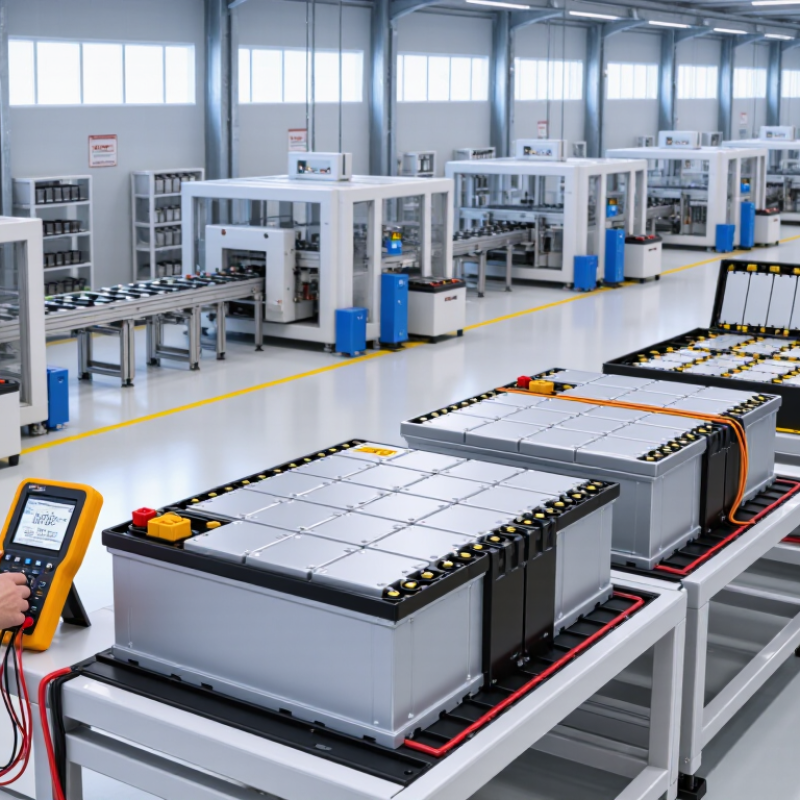
Look for evidence of consistent quality. Request product datasheets, sample units, test reports, warranty terms, and traceable production records. Factory photographs can help, but an independent audit or video inspection offers stronger confidence. Ask how the supplier manages capacity testing, thermal protection, charging limits, and enclosure safety. Details matter. A dependable supplier should also understand your application, whether it involves electric vehicles, solar storage, material-handling equipment, or backup power.

Communication reveals practical experience. Can the supplier answer questions about cycle life under real operating conditions? Can it explain expected performance in cold or hot environments? Check packaging quality, delivery planning, technical documentation, and response times before placing a large order. Trust takes evidence.

Even experienced buyers can make mistakes. A low quotation may exclude testing, customized connectors, spare parts, or suitable shipping protection. Certifications alone do not guarantee every production batch will perform equally. For this reason, a careful selection process should combine factory evaluation, sample testing, contract review, and ongoing quality checks. The best 48v Battery Supplier is not always the cheapest option. It is the partner that provides transparent information, stable products, responsive service, and realistic performance commitments.
How to Choose a Top 48V Battery Supplier in China?

Define Your 48V Battery Requirements and Application

Before choosing a top 48V battery supplier in China, define the battery’s real application. A 48V system may power an electric cart, floor-cleaning machine, solar storage unit, or industrial device. Each application needs different discharge performance. Record the motor’s continuous current and peak current. Measure daily operating hours, charging frequency, and expected backup time. Also check the installation space, connector type, weight limit, and operating temperature.

Tips: Do not select capacity by voltage alone. For example, a 48V 100Ah battery stores about 4.8 kWh under ideal conditions. Actual usable energy can be lower because of temperature, discharge limits, and system losses. Ask suppliers for rated capacity, usable capacity, peak current, cycle-life test conditions, and battery management system protections. Small details matter.

In my experience, unclear requirements cause more problems than weak sales support. A battery for indoor equipment may need low noise and compact dimensions, while an outdoor system may require stronger sealing and wider temperature tolerance. Define the charging method, communication protocol, maintenance access, and replacement plan before requesting quotations. Request a sample and test it under realistic loads, not only in a showroom. This step takes time. It may reveal an overlooked connector or insufficient peak power. Ask for test records, safety documentation, traceable cells, and quality-control procedures. A professional supplier should explain limitations clearly, instead of promising perfect performance.

Assess Supplier Experience, Manufacturing Capacity, and Certifications

Choosing a top 48V battery supplier in China requires more than comparing quotations. Experience should be measurable. Ask for shipment records, application references, and failure-rate data from comparable 48V systems. The International Energy Agency reported that global electric-vehicle battery demand exceeded 750 GWh in 2023. This growth increases competition, but it also makes shallow experience easier to hide. Request production dates, warranty analysis, and documented corrective actions.

Manufacturing capacity deserves a physical check. Review cell traceability, aging rooms, battery-management-system testing, and end-of-line inspection. A capable factory should explain its monthly output without vague promises. BloombergNEF reported an average lithium-ion pack price of 115 dollars per kWh in 2024, following a 20% annual decline. Lower prices can help, but extreme discounts may reflect weaker testing or inconsistent cells. I would compare three quotations carefully. Price alone remains a poor technical decision.

Certifications must match the battery’s use and destination. ISO 9001 supports quality management, while ISO 14001 indicates environmental controls. For industrial lithium batteries, IEC 62619 testing is highly relevant. UN 38.3 documentation supports transport compliance. Ask for certificate numbers, issuing laboratories, test dates, and exact model coverage. A certificate copied into a sales presentation proves little. Factory audits, sample testing, and production samples reveal more. One practical weakness is often overlooked: supplier communication after delivery. A fast reply during negotiation does not guarantee dependable engineering support later. Ask difficult questions before signing.

How to Choose a Top 48V Battery Supplier in China

A practical supplier assessment should focus on manufacturing experience, production capacity, quality management, and battery safety certifications. The chart below presents a suggested evaluation weighting for comparing suppliers without using company-specific data.

How to use this framework: Request verifiable evidence for each category, such as production records, factory audit results, ISO 9001 documentation, UN 38.3 test reports, IEC 62619 or UL 1973 compliance where applicable, and documented quality-control procedures.

Compare Battery Chemistry, Performance, Safety, and Customization Options

Choosing a 48V battery supplier in China requires more than comparing prices. Chemistry affects weight, lifespan, charging speed, and risk. LiFePO4 usually offers strong thermal stability and long cycle life. NMC can provide higher energy density, but it needs stricter thermal control. Lead-acid batteries remain inexpensive, yet their usable capacity and cycle life are often lower.

Look closely at measured performance. Ask for capacity results at 25°C, a defined discharge rate, and 80% depth of discharge. BloombergNEF reported an average lithium-ion pack price of 139 US dollars per kWh in its 2023 survey. However, a low quotation may hide weaker cells, limited testing, or an oversized marketing claim. Request cycle-life curves, BMS protection settings, charging limits, and temperature data. Safety evidence should include UN 38.3 transport testing, IEC 62619 evaluation, and documented quality procedures. Certifications alone are not enough. Verify the test scope.

Tips: Visit the production line, inspect cell traceability, and test random samples before payment. Confirm enclosure ratings, connector types, communication protocols, and cold-weather behavior. Customization should include more than a logo. A reliable supplier can adjust voltage windows, mounting dimensions, firmware, and pack capacity without weakening protection. I would also require a written warranty with clear capacity-retention limits. This step feels slow, but skipping it can become expensive. Even experienced buyers sometimes overlook service response time. That matters when a battery stops working in the field.

Verify Quality Control, Testing Standards, Warranty, and Technical Support

Choosing a top 48V battery supplier in China requires evidence, not attractive samples. BloombergNEF’s 2024 Battery Price Survey reported an average global pack price of 115 US dollars per kWh, down 20% from 2023. Lower prices can reflect better manufacturing, but they can also hide weaker cells or limited testing. Ask for cell traceability, production records, and the battery management system’s protection settings.

Quality control should follow a documented process. Check whether the factory operates under ISO 9001 and can provide test reports for IEC 62619, UN 38.3, and applicable regional requirements. These tests cover safety, transport, vibration, temperature changes, and electrical abuse. Request capacity data at the stated discharge rate, not only a marketing figure. Inspect sample results from multiple batches. One perfect sample proves little.

Warranty language needs practical detail. Require written limits for capacity retention, cycle conditions, operating temperature, response time, and replacement procedures. The International Energy Agency reported that global EV battery demand exceeded 750 GWh in 2023, showing how quickly battery supply chains are scaling. Scale is useful, but it does not guarantee careful support. Ask for remote diagnostics, spare-part availability, firmware control, and an English-speaking engineer. Technical support often fails after installation. I have seen specifications change between quotation and delivery; that uncomfortable gap deserves a signed approval record.

Evaluate Pricing, Logistics, Compliance, and Long-Term Supplier Reliability

A strong 48V battery supplier should offer more than an attractive quotation. Compare cell grade, usable capacity, cycle-life data, BMS functions, warranty coverage, and replacement terms. Request a cost breakdown for cells, assembly, testing, packaging, and shipping. A low price can hide weaker components or limited after-sales support. That risk is expensive.

Logistics deserve close attention. Confirm production lead times, minimum order quantities, export experience, and packaging quality. Ask how batteries are labeled and protected during sea or air transport. Review documents such as UN 38.3 test reports, safety data sheets, and relevant IEC test records. Documents should match the exact battery model. Not a similar one.

Long-term reliability depends on evidence, not confident promises. Examine factory quality procedures, incoming cell inspections, end-of-line testing, and serial-number traceability. A sample order can reveal voltage consistency, connector quality, charging behavior, and communication faults. Request independent testing when the application is critical. A polished factory visit proves little by itself. No checklist is perfect. I have seen suppliers meet delivery targets while missing small documentation details. That experience changed my evaluation method. I now require written corrective-action records, clear warranty response times, and regular production updates before signing a long-term agreement.

How to Choose a Top 48V Battery Supplier in China? - Evaluate Pricing, Logistics, Compliance, and Long-Term Supplier Reliability

Evaluation Dimension Practical Benchmark for a Competitive 48V Supplier Recommended Verification Evidence Suggested Weight Score
Battery Chemistry and Configuration Clearly specifies whether the pack is lithium-ion, LiFePO4, or another chemistry. Common 48V configurations include 13S lithium-ion at approximately 48.1V nominal and 16S LiFePO4 at approximately 51.2V nominal. Cell datasheet, pack specification, nominal voltage, charge voltage, discharge cut-off voltage, and battery-management-system settings. 8% __/10
Pricing Transparency Provides a complete quotation showing cell grade, usable energy, BMS rating, enclosure, connectors, warranty, packaging, Incoterm, and tooling charges. For reference, bulk pricing for 48V lithium battery packs varies widely by chemistry, capacity, cell grade, order quantity, and certification. Itemized pro forma invoice, total landed-cost estimate, sample price, tooling fee, payment terms, and written explanation of price-adjustment conditions. 12% __/10
Total Cost of Ownership Evaluates cost per usable kWh rather than purchase price alone. A reliable comparison should include expected cycle life, usable depth of discharge, efficiency, replacement risk, freight, duties, and after-sales support. Usable-capacity test report, cycle-life test conditions, efficiency data, warranty exclusions, and five-year replacement-cost estimate. 10% __/10
Minimum Order Quantity and Customization Supports a reasonable sample order before mass production. Standard packs may have lower minimum quantities, while custom enclosures, communication protocols, labels, and cable assemblies may require higher quantities or tooling fees. Written sample policy, minimum order quantity, engineering-change process, prototype lead time, and ownership terms for custom tooling. 6% __/10
Production Lead Time Typical lead times may range from approximately 2–6 weeks for standard products and 6–12 weeks for heavily customized packs, depending on cell availability, testing, packaging, and order volume. Capacity plan, production schedule, historical on-time-delivery data, and written delay-notification procedure. 8% __/10
Export Logistics Understands lithium-battery shipping requirements and can arrange compliant sea, air, rail, or multimodal transport. Sea freight is commonly more economical, while air freight may face stricter limits and higher documentation requirements. Proposed Incoterm, freight quotation, packing method, dangerous-goods classification, transit-time estimate, and customs-document checklist. 10% __/10
Battery Transport Compliance Provides documentation appropriate to the destination market and transport mode, including UN 38.3 test evidence and correctly prepared dangerous-goods shipping documents where required. UN 38.3 test summary, safety data sheet, transport classification, package test information, and applicable declaration documents. 10% __/10
Product Safety and Market Compliance Can identify the requirements of the target market, such as electrical safety, electromagnetic compatibility, restricted substances, recycling obligations, and battery labeling rules. Requirements vary by destination and application. Applicable test reports, declaration of conformity, technical file, labels, user manual, material declarations, and traceable report numbers. 12% __/10
Quality-Control System Uses incoming-cell inspection, welding-parameter control, insulation testing, BMS programming, capacity testing, aging, final inspection, and serial-number traceability. Quality manual, inspection plan, sample test records, calibration certificates, defect-rate data, corrective-action reports, and traceability examples. 10% __/10
BMS and System Compatibility Supports required protections and communication interfaces, such as overcharge, over-discharge, over-current, short-circuit, temperature protection, state-of-charge reporting, and CAN or RS485 communication when needed. BMS datasheet, communication protocol, fault-response table, inverter or charger compatibility test, and firmware-control procedure. 8% __/10
Warranty and After-Sales Support Offers a clearly defined warranty period, normally linked to time, throughput, or cycle count. Strong support includes a documented claim process, response-time commitment, remote troubleshooting, and replacement arrangements. Warranty terms, exclusions, expected response time, spare-parts policy, repair or replacement process, and service contact structure. 8% __/10
Financial and Operational Stability Maintains stable production capacity, dependable component sourcing, documented ownership or operating history, and contingency plans for cell shortages, logistics disruption, and regulatory changes. Business registration information, facility audit, production-capacity evidence, supplier-continuity plan, and independently verifiable trade references. 8% __/10
Weighted Supplier Evaluation Result 100% __/100
Scoring guidance: Score each category from 0 to 10. Give zero points when evidence is missing or unverifiable. A total score of 80 or above may indicate a strong candidate, provided that safety, transport, and market-compliance documents are complete and independently validated.

FAQS

Which battery chemistry suits a 48V application?

LiFePO4 usually offers long cycle life and strong thermal stability. NMC can provide higher energy density. It needs tighter temperature control. Lead-acid costs less, but usable capacity and lifespan are often lower. The best choice depends on weight, space, charging speed, and operating conditions.

What performance data should I request?

Request capacity results at 25°C, a defined discharge rate, and 80% depth of discharge. Ask for cycle-life curves and usable capacity figures. Do not rely on headline capacity alone. Marketing numbers can look bright, like a full display panel. Real testing may tell a different story.

How can I compare battery prices fairly?

Request a written cost breakdown. It should cover cells, assembly, testing, packaging, and shipping. Compare cell grade, usable capacity, BMS functions, warranty, and replacement terms. A low quote may hide weaker cells or limited support. Cheap is not always cheap.

What safety evidence should a supplier provide?

Ask for transport testing, safety evaluations, and documented quality procedures. Verify that reports match the exact battery model. Check BMS protection settings, charging limits, and temperature data. A certificate alone proves little. Review the test scope carefully.

What customization options are important?

Useful customization may include voltage windows, mounting dimensions, firmware, and pack capacity. Confirm connector types and communication protocols before ordering. Customization should not weaken protection functions. A logo is not enough. Small fitting errors can stop installation.

How should I test samples before a larger order?

Inspect random samples before payment. Check voltage consistency, connector quality, charging behavior, and communication faults. Test cold-weather performance when relevant. Inspect serial-number traceability and enclosure protection. One sample cannot reveal everything. That limitation deserves attention.

What logistics details should I confirm?

Confirm production lead time, minimum order quantity, export experience, and packaging quality. Ask how batteries are labeled and protected during sea or air transport. Request current transport documents and safety data sheets. Poor packaging can damage a sound battery. It happens.

How can I judge long-term supplier reliability?

Examine incoming cell inspections, factory testing, and corrective-action records. Ask for clear warranty response times and capacity-retention limits. Confirm regular production updates and replacement procedures. A polished factory visit proves little by itself. I would still use a sample order and independent testing for critical applications.

Conclusion

Choosing the right 48v Battery Supplier in China requires more than comparing prices. Start by clearly defining your battery’s voltage, capacity, dimensions, operating environment, cycle requirements, and intended application. Then evaluate each supplier’s industry experience, production capacity, engineering resources, and relevant certifications. Pay close attention to battery chemistry, energy density, safety features, charging performance, lifespan, and the supplier’s ability to provide practical customization for your equipment or project.

A reliable supplier should also demonstrate strong quality control through cell inspection, assembly checks, performance testing, and safety verification. Confirm the warranty terms, technical support, replacement process, and communication efficiency before placing an order. In addition, assess total costs, lead times, packaging, transportation arrangements, documentation, and compliance with applicable market requirements. A supplier that offers transparent pricing, stable logistics, consistent product quality, and dependable long-term service is more likely to support your business successfully and reduce operational risks.


Aria

Aria

Aria is a dedicated marketing professional with a deep passion for innovative strategies and a keen understanding of our company's product offerings. With a wealth of experience in the industry, Aria excels at crafting engaging content that highlights the unique features and benefits of our......