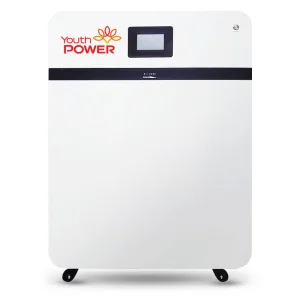
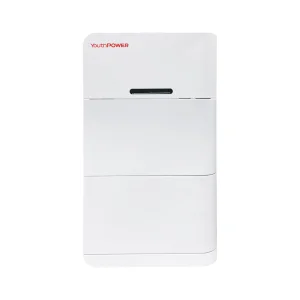
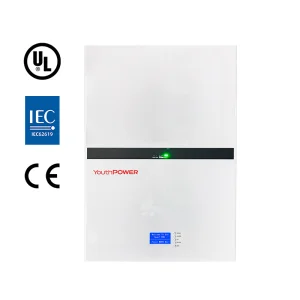
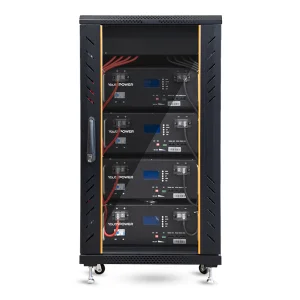
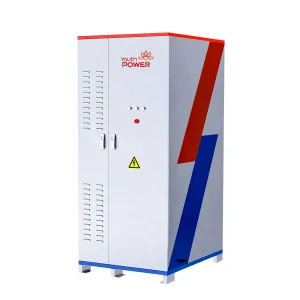
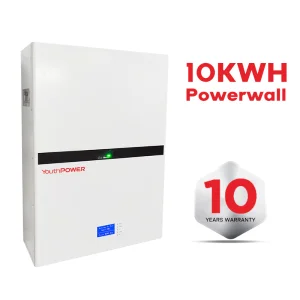
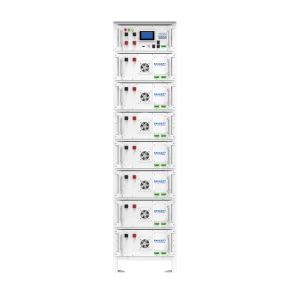
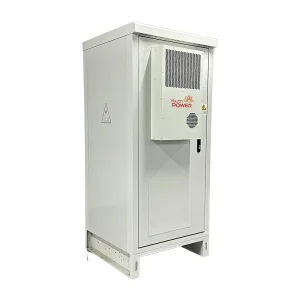
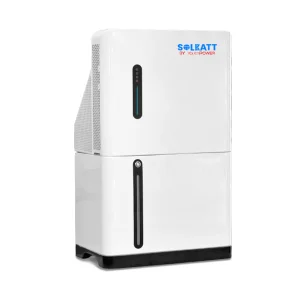
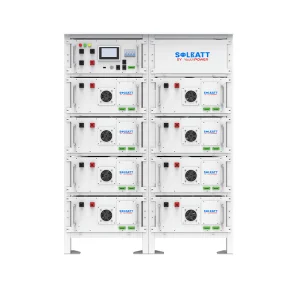
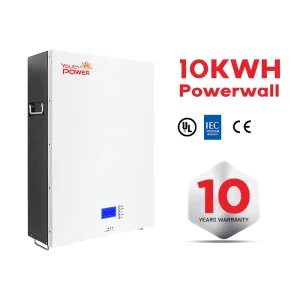
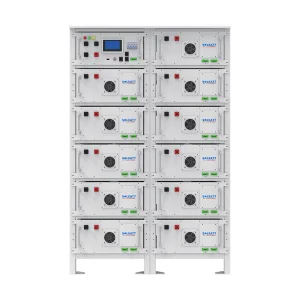
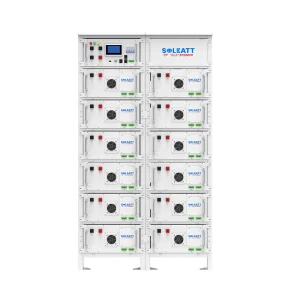
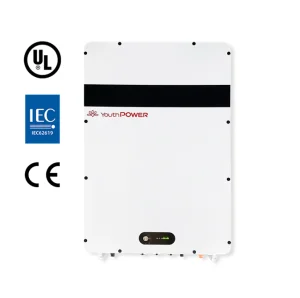
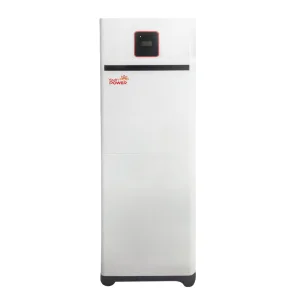
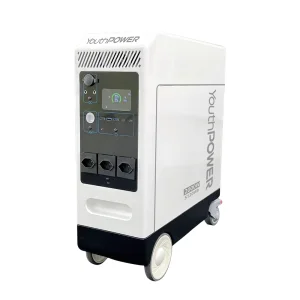
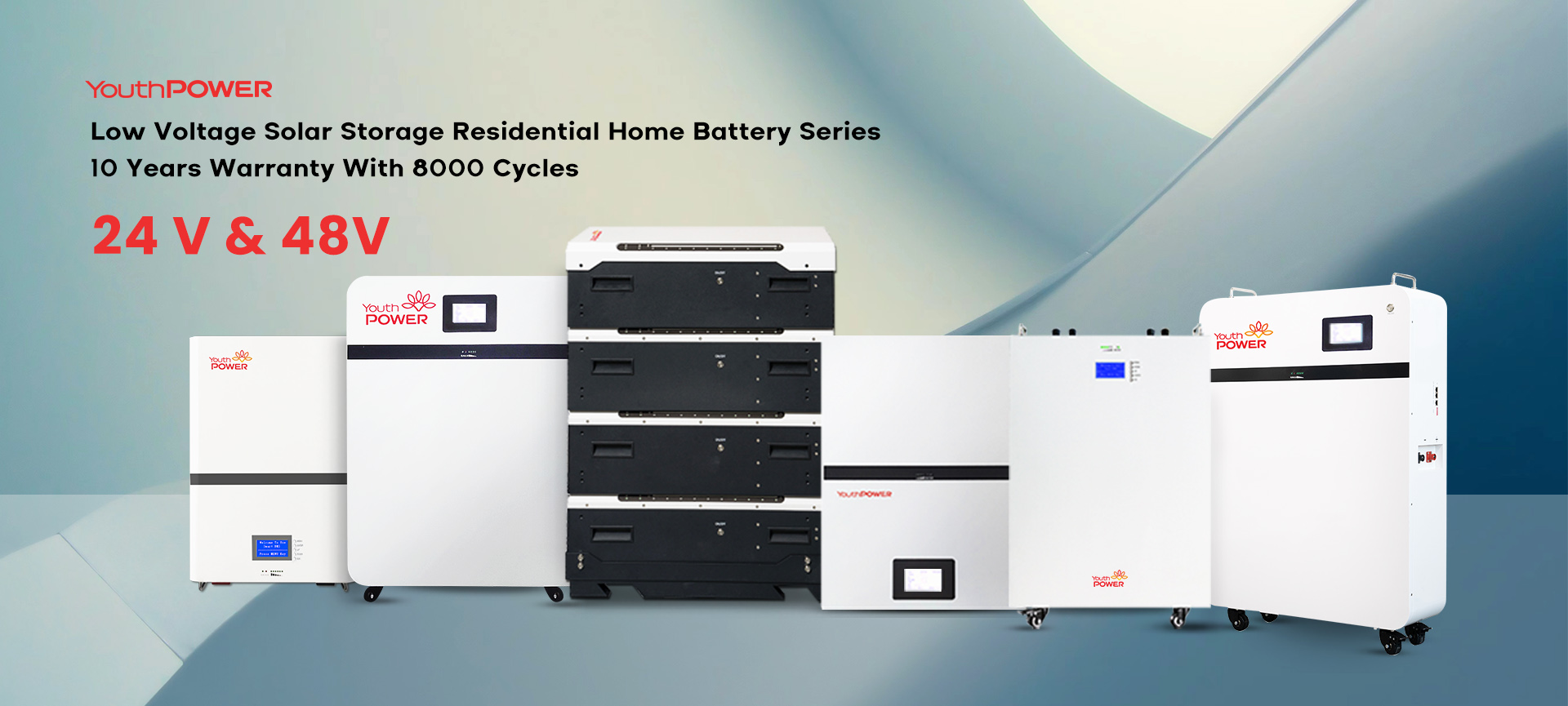
Explore our engineered range of high-capacity lithium storage products designed for microgrids, commercial operations, and smart homes.
Global energy transitions demand higher safety standards, improved cycle durability, and rapid scalability. In the realm of commercial, industrial (C&I), and high-capacity residential applications, the 200 Ah lithium cell configuration has emerged as the definitive industry standard.
By leveraging Lithium Iron Phosphate (LiFePO4) chemistry at a 200 Ah capacity, companies bypass the thermal and safety pitfalls of conventional cobalt-based chemistries while securing a cost-to-performance sweet spot. When assembled in 48V (15S/16S) configurations, 200 Ah systems deliver approximately 10 kWh of dense, long-cycle energy storage. This standardized unit serves as the bedrock modular component for microgrids, telecom base stations, data center backups, and scalable industrial parks worldwide.
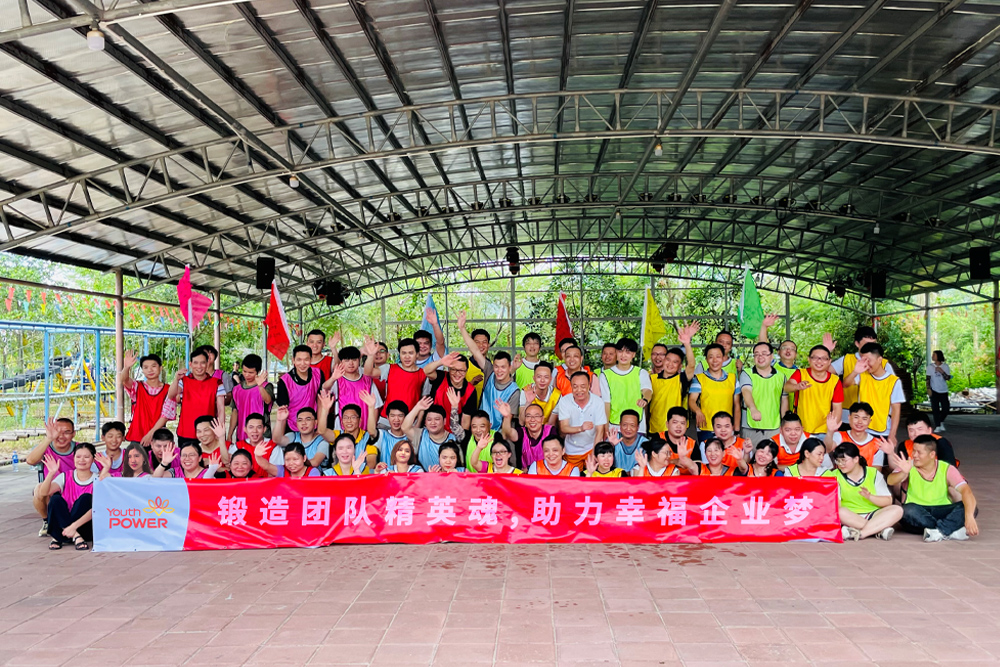
Integrating state-of-the-art manufacturing, automated BMS design, and global compliance testing.
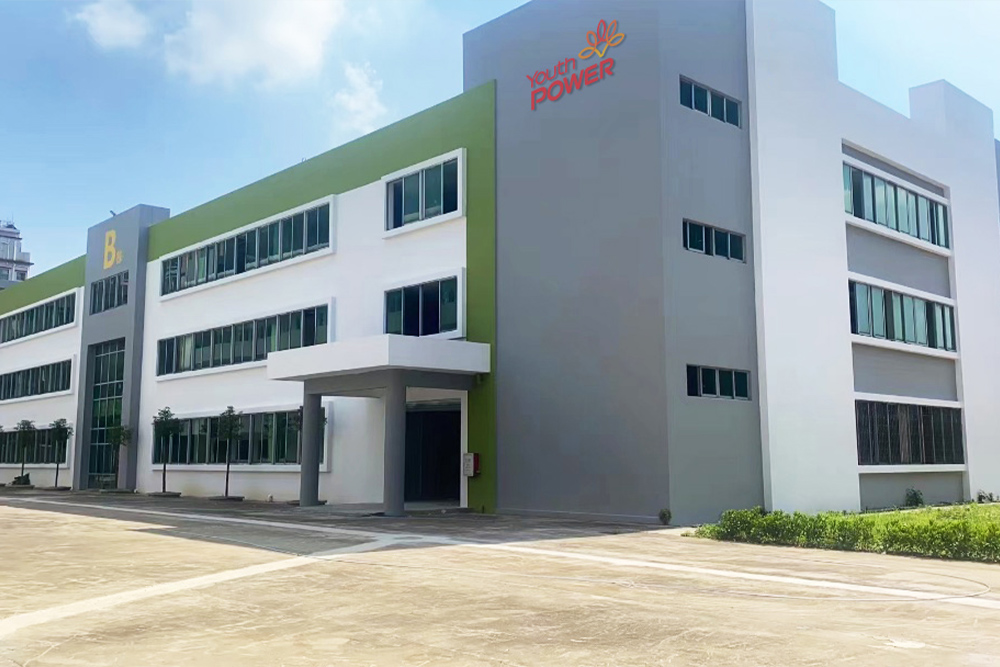
Founded in 2003, YouthPOWER has now become one of the leading suppliers of solar storage lithium batteries in the world. With a broad range of energy storage solutions, it covers a series of 24V, 48V and higher voltage lithium batteries solutions.
YouthPOWER has engaged in the battery technology and production for almost 20 years, with abundant manufacturing experience and strong new product R & D capability. Through many years of hard work and market promotion, we have created our own brand "YouthPOWER" in 2019.
With nearly 20 years’ experience in the battery industry, we have the capability to provide you with both the products you need and the most suitable products you want. We are always ready to supply the first-class products and meet the various needs of the customers.
We have established good business relationships with our customers from all over the world. And we have a good cooperation with all our customers as well for many years running. Supported by our local vendors of raw materials, we can certainly offer you the best prices.
We are so proud that YouthPOWER has offered the reliable solar storage solution for over 1,000,000 families now in the world.
A data-backed technical comparison showcasing long-term economic dividends and thermal safety metrics.
| Performance Metric | YouthPOWER 200 Ah LiFePO4 | Standard NCM Lithium | Conventional Lead-Acid (AGM/Gel) |
|---|---|---|---|
| Nominal Energy (48V Pack) | 10.24 kWh | 9.6 kWh | 9.6 kWh (Requires 50% max DoD limit) |
| Cycle Life (80% DoD, 25°C) | > 6,000 Cycles | ~ 2,000 Cycles | 300 - 600 Cycles |
| Safe Temperature Range | -20°C to +60°C | -10°C to +45°C | -15°C to +40°C |
| Thermal Runaway Threshold | 270°C (Extremely Safe) | 150°C (High Risk) | Risk of gas emission & dry-out |
| Level of Maintenance | Zero Maintenance Needed | BMS Monitoring Required | Frequent Voltage Inspections Required |
| 10-Year Total Ownership Cost | Lowest (Highly Optimized ROI) | Medium-High | Extremely High (Requires 3-4 replacements) |
Our milestone achievements illustrating our transition from a domestic cell exporter to a global ESS technology pioneer.
Starting with raw cell material sourcing and manufacturing in 2003, YouthPOWER scaled its capabilities vertically, integrating custom BMS boards, metal stamping, and safety certification suites directly under our specialized manufacturing line.
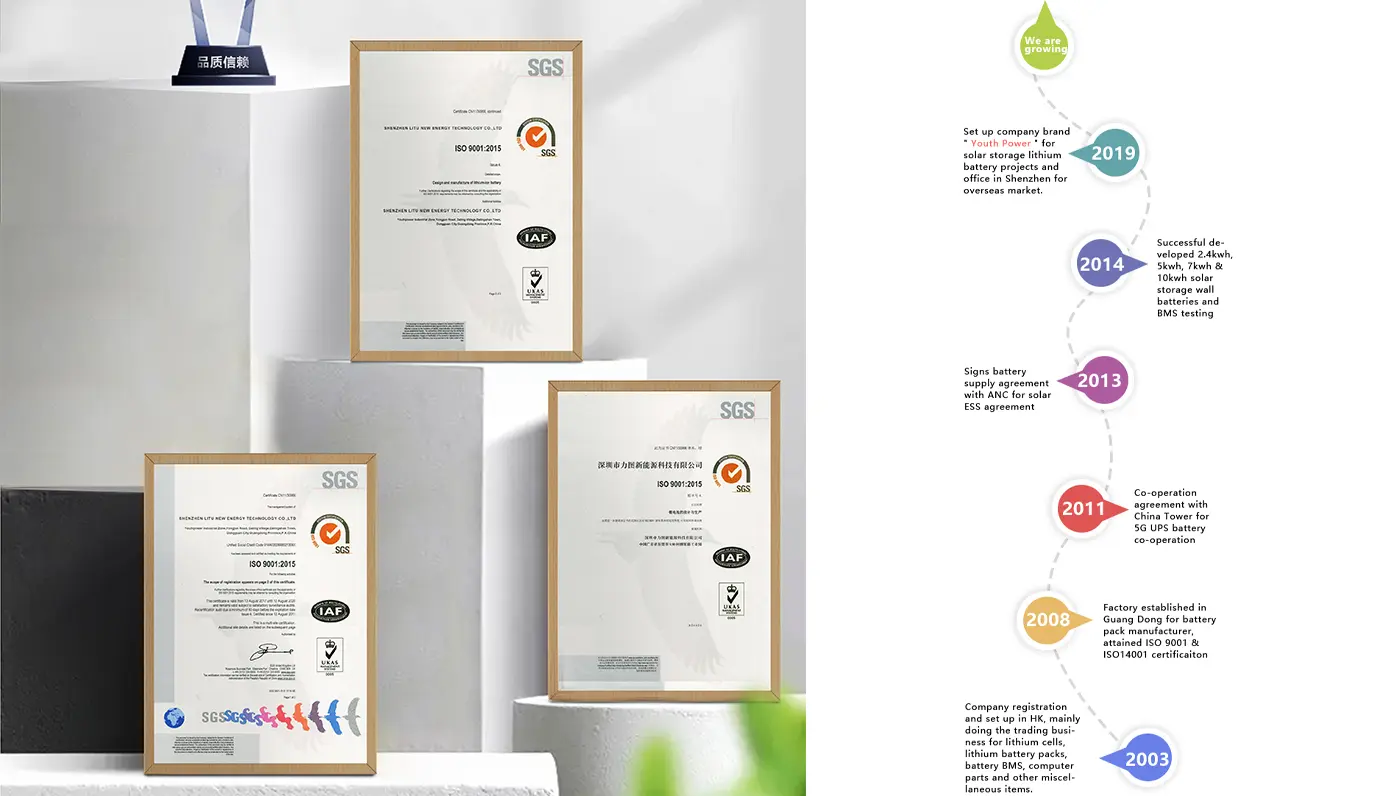
Engineered to adapt to distinct geographic regulatory environments and site-specific conditions.
Designed for compliance with UL 1973, UL 9540A, and FCC Part 15. Our 200 Ah systems natively interface with split-phase (120V/240V) inverters, allowing seamless residential auto-transfer backup and commercial peak load shaving under high grid tariff environments.
Supporting high-efficiency small-footprint storage configurations (e.g. Balcony Solar Lithium Battery Systems). With complete CE, IEC 62619, and local grid connection compliance, these modules integrate with DIN-rail microinverters, providing urban apartments with independent energy control.
For remote areas across the APAC region, Africa, and South America, where grid stability is low and ambient heat is extreme. The integrated BMS provides automatic cell temperature management, auxiliary heating options, and IP65 dust-proof / moisture-proof protection.
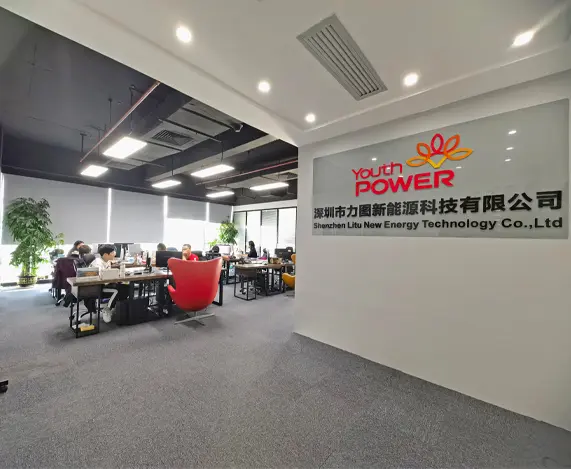
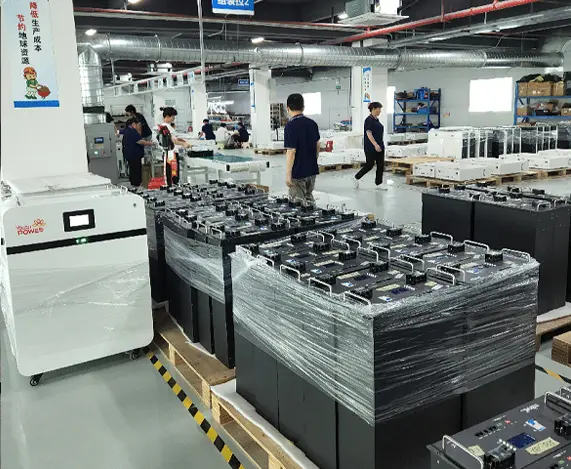
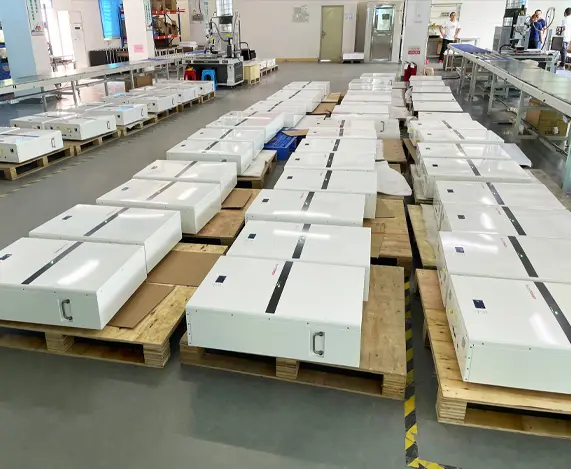
Direct view of YouthPOWER physical warehouse, product assembly, and quality checking units.
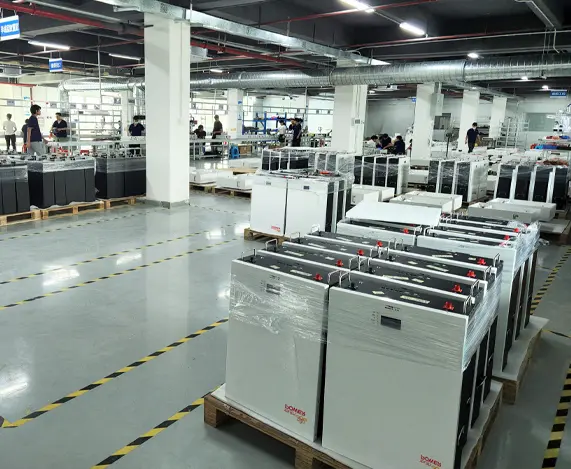
Our upcoming product development cycle and next-generation battery architecture integration plan.
We are integrating IoT modules into our 200 Ah designs, allowing clients to monitor cell delta voltages, cycle histories, and temperature parameters in real-time through secure cloud interfaces.
Transitioning modular setups toward semi-solid-state cells. This milestone will double volumetric energy density, extending warranty scopes from 10 years to 15 years for standard utility projects.
Establishing localized chemical recovery partnerships in Europe and North America to ensure our batteries undergo sustainable recycling programs at end-of-life status.
Essential guidance on selection, cell parameters, inverter integration, and warranty logistics.
Connecting fewer high-capacity cells in series/parallel dramatically decreases the complexity of the internal busbars and reduces physical failure points. A single 48V 200 Ah pack uses 16 prismatic cells, whereas a setup using 50 Ah cells requires 4 times the connection terminals, increasing internal resistance, thermal losses, and potential BMS cell balancing issues.
Our Grade A 200 Ah prismatic cells deliver > 6,000 charge/discharge cycles at 80% Depth of Discharge (DoD) under 0.5C charge/discharge rates. At this point, the battery retains approximately 80% of its initial nominal capacity, translates to over 15 years of daily cycling.
Yes, our Smart BMS features complete protocol flexibility. It is natively programmed with RS485, RS232, and CAN interfaces, enabling system integrators to extract real-time cell parameters, SOC, SOH, alarms, and diagnostic logs into local PLCs, industrial gateways, or remote cloud systems.
Our standard 48V 200 Ah battery packs support direct parallel expansion up to 15 units without external master controller devices, enabling scalable capacity up to 150 kWh. For larger-scale high-voltage projects, we engineer cluster systems using centralized master BMS units.
Our standard designs utilize smart passive balancing, dissipating excess charge from high cells through bypass resistors once they pass 3.45V. For custom heavy-duty configurations, we offer active balancing configurations (up to 2A balancing current), which actively transfers energy from high-charge cells to low-charge cells, maximizing overall usable energy.
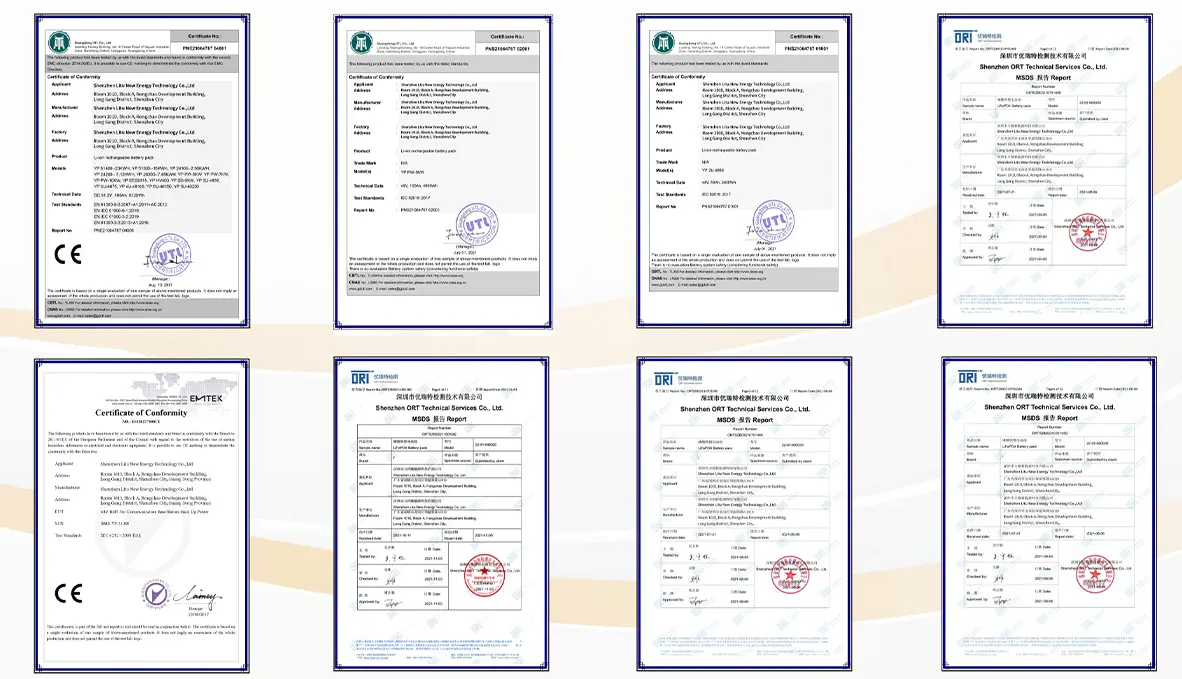
Lithium battery packs of this capacity are certified under UN3480 Class 9 Dangerous Goods. We ensure complete compliance documentation, including UN38.3 report certifications, MSDS listings, and drop test reports, working with certified carriers to handle customs clearance for global ocean or air freight.
Our systems include multi-tier hardware and software safeties: 1) Thermal sensors dispersed within the battery module, 2) Automatic over-current/short-circuit protection switches, 3) Anti-explosion pressure release valves on every prismatic cell, and 4) Chemical fire barrier isolation sheets sandwiched between adjacent cell columns.
Standard product orders are processed and shipped within 15-25 days. For OEM/ODM requirements, including custom metal colors, silk-screen logos, custom BMS parameters, or custom layout dimensions, our R&D engineering team typically delivers working prototype designs within 30-45 days.
Engineered for higher voltage thresholds, dynamic grid balancing, and reliable backup applications.
 YouthPOWER