Explore our selection of premium scalable outdoor ESS, high voltage battery packs, and split phase residential storage options.
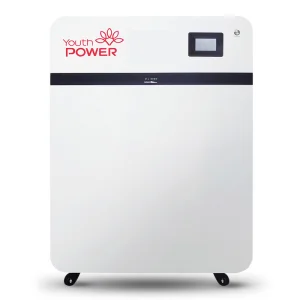
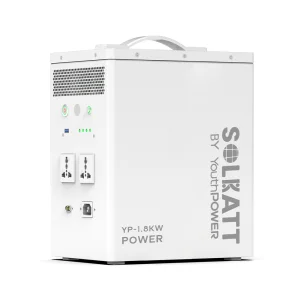
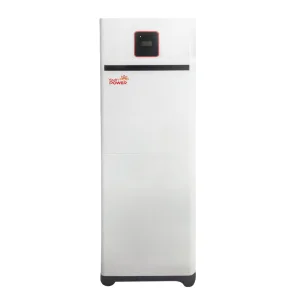
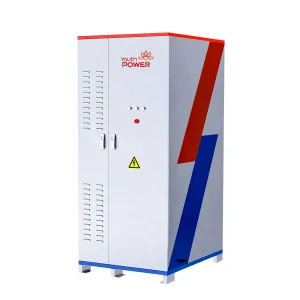
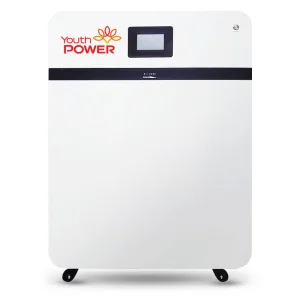
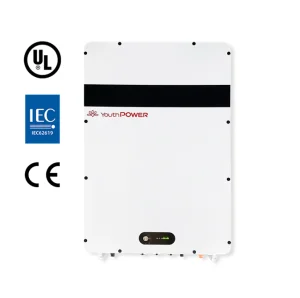
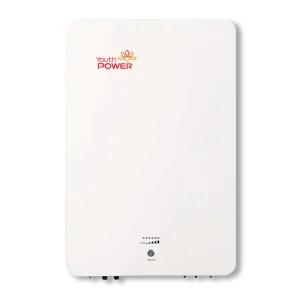
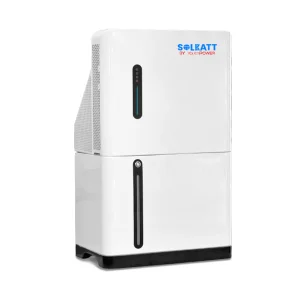
The global transition toward decentralized power grids demands high-performance Energy Storage Systems (ESS) capable of peak shaving, load shifting, and seamless emergency backup. By coupling solar photovoltaic (PV) systems with advanced Lithium Iron Phosphate (LiFePO4) storage, commercial operators and residential homeowners can transform variable green energy into dispatchable power. Our research highlights that shifting from lead-acid chemistries to LFP reduces the Levelized Cost of Storage (LCOS) by over 60% when calculated across the system's operational lifetime.
For high-capacity solar backups, the choice of electrochemistry dictates long-term return on investment (ROI). Lithium Iron Phosphate (LiFePO4) has emerged as the premier choice due to its high thermal runaway threshold (approx. 270°C compared to NMC's 210°C), absence of cobalt, and exceptional mechanical stability. LFP cells typically maintain over 80% Capacity Retention after 6,000 cycles at 80% Depth of Discharge (DoD), translating to 15+ years of daily cycling. This dwarfs lead-acid options (typically 500-1,000 cycles) and edges out NMC on longevity and safety profiles.
Modern commercial and utility-scale projects are increasingly moving toward high-voltage configurations (e.g., 400V to 716V systems). High-voltage battery systems minimize conversion losses and allow for reduced cable cross-sections, lowering material costs and installation complexity. In contrast, residential setups frequently leverage 48V/51.2V architectures for safety and ease of scaling. When selecting a solar battery partner, analyzing the efficiency margins of your inverter's DC-DC conversion stage is key to maximizing system round-trip efficiency (RTE).
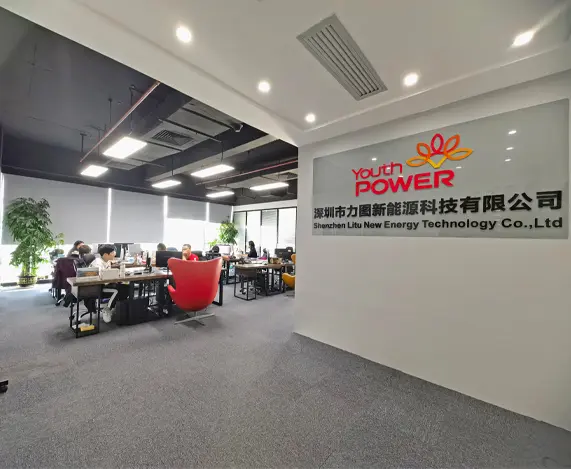
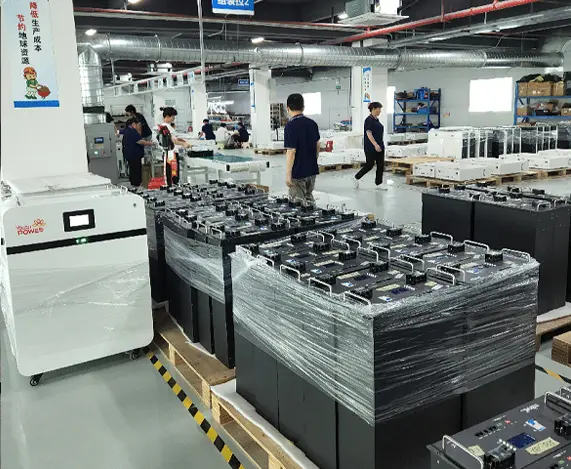
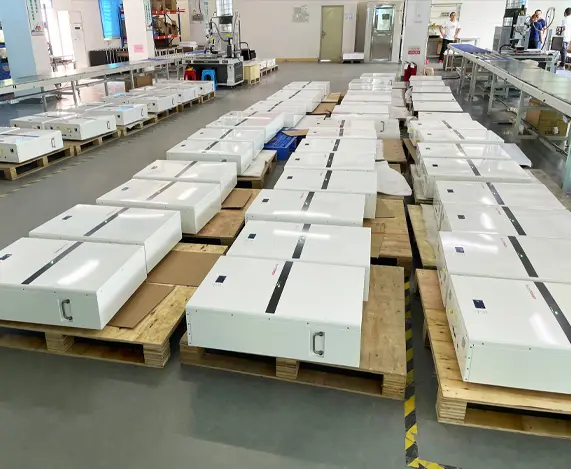
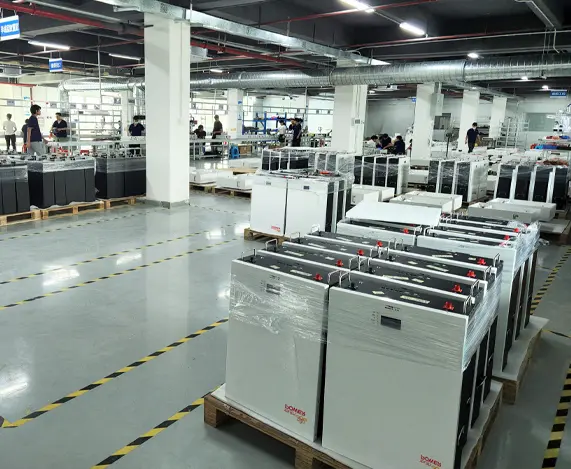
Discover the manufacturing strength and technological heritage of YouthPOWER.
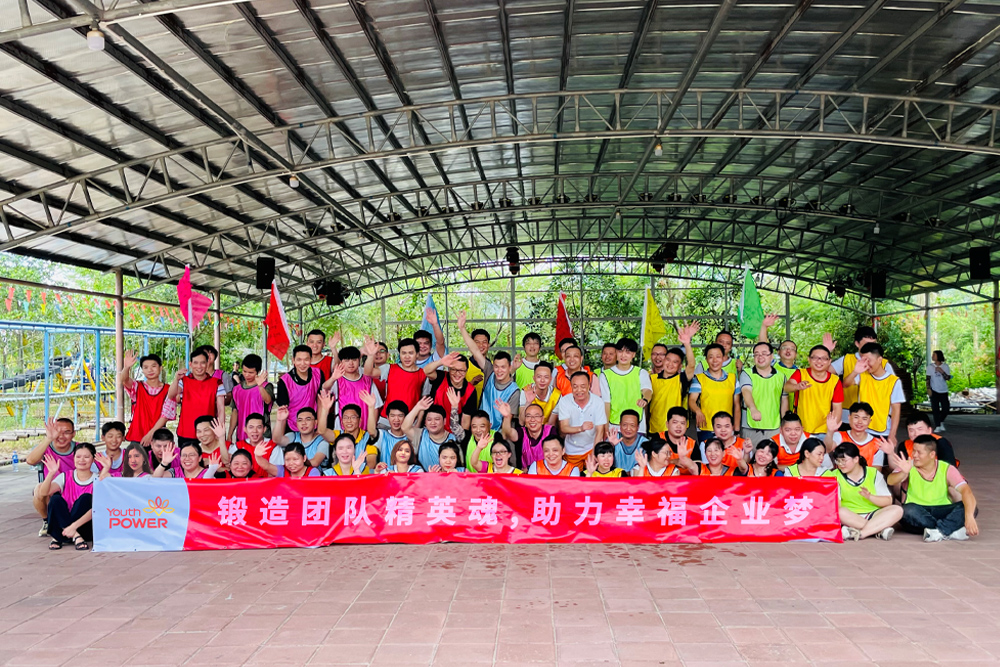
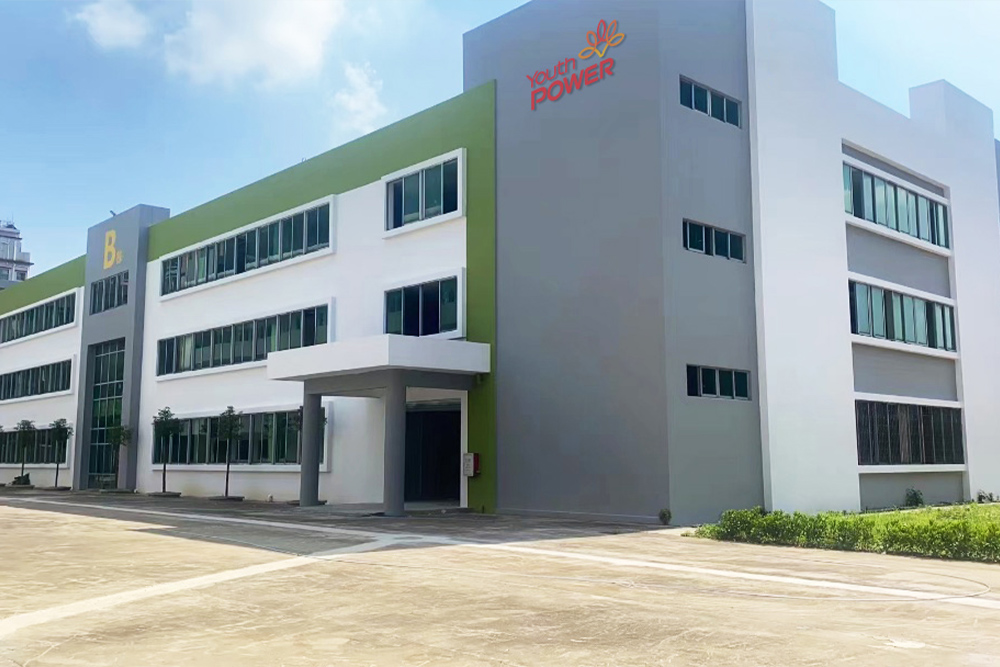
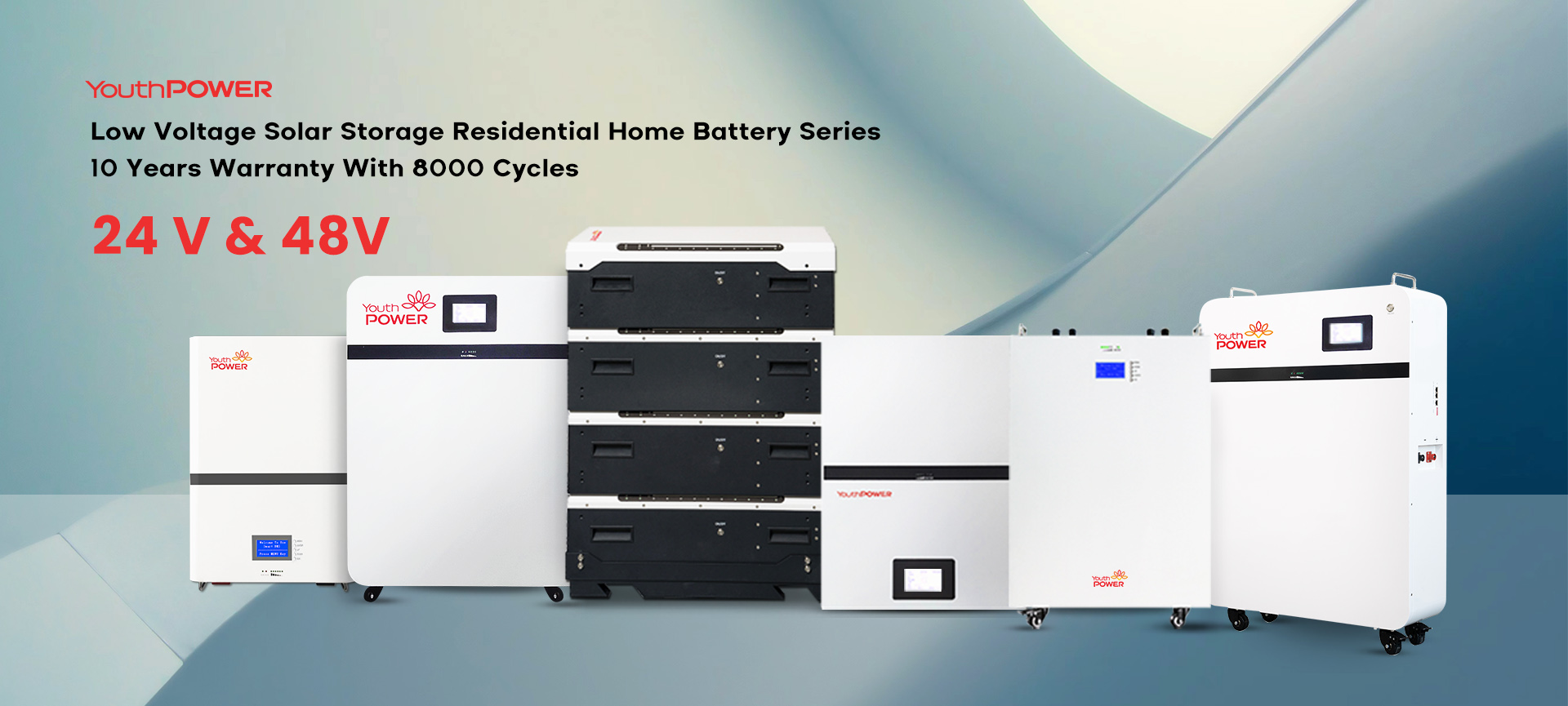
Founded in 2003, YouthPOWER has now become one of the leading suppliers of solar storage lithium batteries in the world. With a broad range of energy storage solutions, it covers a series of 24V, 48V and higher voltage lithium batteries solutions.
YouthPOWER has engaged in the battery technology and production for almost 20 years, with abundant manufacturing experience and strong new product R & D capability. Through many years of hard work and market promotion, we have created our own brand "YouthPOWER" in 2019.
With nearly 20 years’ experience in the battery industry, we have the capability to provide you with both the products you need and the most suitable products you want. We are always ready to supply the first-class products and meet the various needs of the customers.
We have established good business relationships with our customers from all over the world. And we have a good cooperation with all our customers as well for many years running. Supported by our local vendors of raw materials, we can certainly offer you the best prices.
We are so proud that YouthPOWER has offered the reliable solar storage solution for over 1,000,000 families now in the world.
A history of innovation leading the transition to highly efficient lithium energy storage systems.
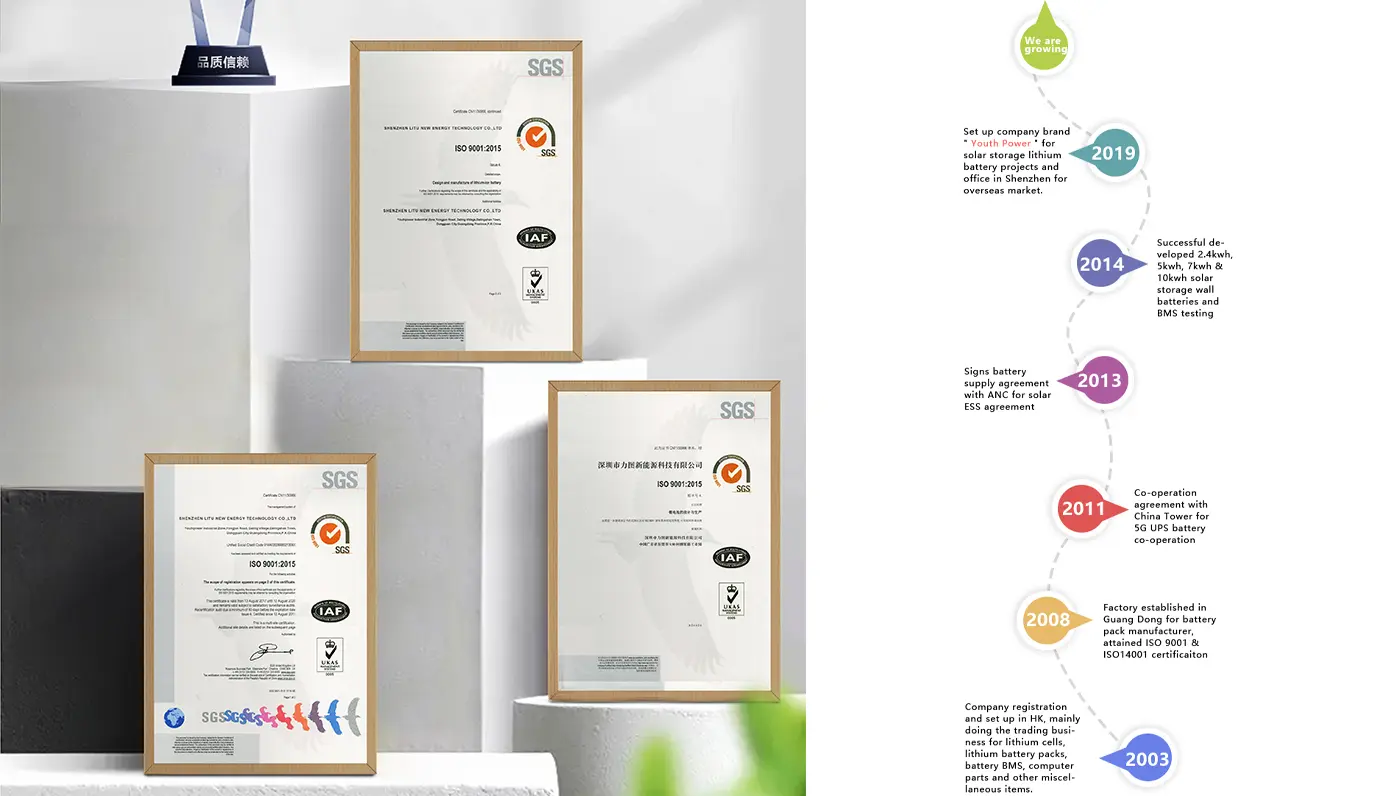
Began as a precision cell components fabricator, supplying lead-acid and NiMH parts to global markets before shifting early engineering focus to LiFePO4 chemistry.
Launched standard 24V and 48V rack-mounted battery modules for telecom backup grids, proving high durability and cycle longevity in harsh environments.
Officially established global brand "YouthPOWER", launching safety-focused high-voltage residential stacks and smart waterproof outdoor energy storage configurations.
Introduced megawatt-scale industrial containers, customized liquid-cooling thermal setups, and advanced AI-integrated EMS interfaces to global project developers.
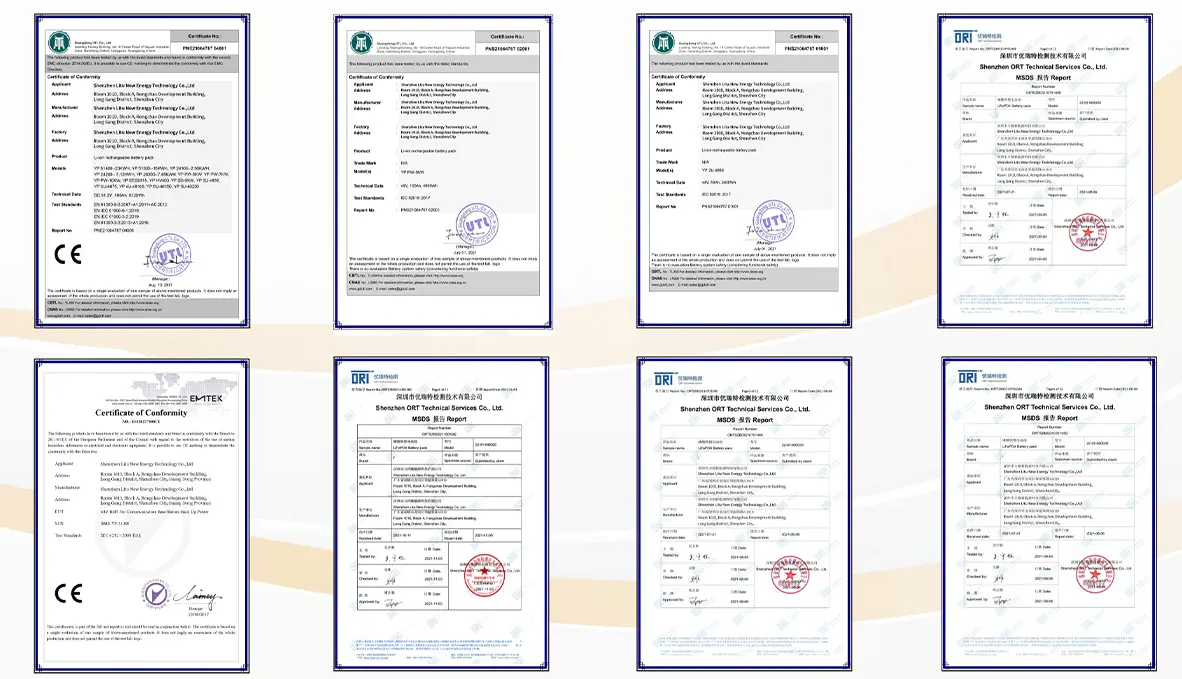
Ensuring system durability, safety certification, and smooth utility interconnection worldwide.
Systems feature compatibility with UL 1973 for stationary battery packs and UL 9540A for thermal runaway fire safety mitigation. Complies with local utility rules, including California SGIP requirements.
Certified to IEC 62619 for industrial lithium storage safety and EN 50549-1/2 for grid interconnection. Optimized for VPP integration with European hybrid inverters.
All systems maintain UN 38.3 certification for safe international logistics. Features rugged IP65 enclosure options for tropical climates, coastal areas, and high-temperature locations.
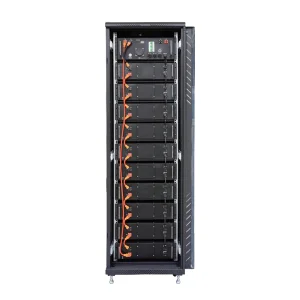
Choose from our specialized high-capacity commercial modules, powerwalls, and custom modular configurations.
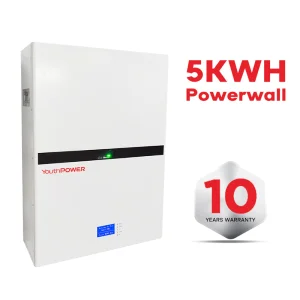
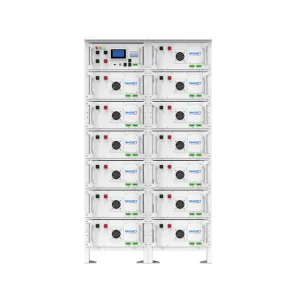
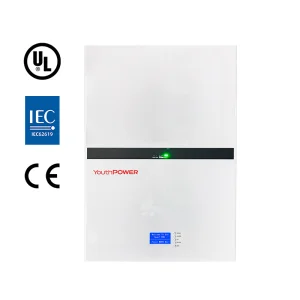
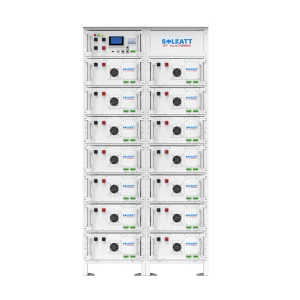
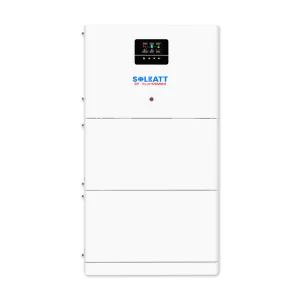
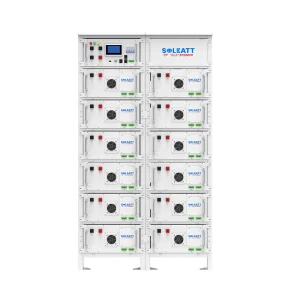
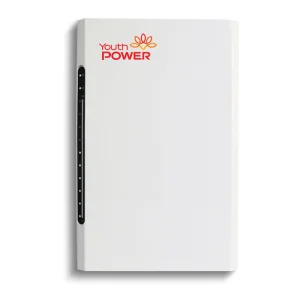
Detailed technical answers to help purchasing managers, EPC contractors, and homeowners choose the right solar battery setup.
Pricing for solar batteries is determined by several core factors: cellular chemistry cost, packaging and thermal management systems, built-in battery management systems (BMS), and wholesale volume. Residential low-voltage batteries (such as 48V 100Ah powerwalls) range from $250 to $400 per kWh at factory levels, depending on certification standards. Large-scale commercial systems (such as the 186kWh or 215kWh container systems) require heavy liquid-cooling systems, advanced aerosol fire suppression, and complex high-voltage management systems, which impact the per-kWh cost but offer significantly higher overall capacity and longer service life.
Low-voltage (LV) systems, operating at 48V or 51.2V, are standard for residential applications due to their safety during manual installation and simple modular expansions. However, transmission losses are higher under high currents. High-voltage (HV) systems (typically 400V to 716V) operate at much lower currents for the same power output. This reduces I²R resistive losses in the wiring, allowing for smaller cables, higher inverter conversion efficiency, and faster charge/discharge rates, making them ideal for commercial and industrial (C&I) projects.
With 20 years of manufacturing experience, YouthPOWER employs Grade-A prismatic LFP cells. Each batch undergoes rigorous voltage, capacity, and internal resistance balancing before assembly. Our smart BMS prevents overcharge, over-discharge, over-current, short circuits, and thermal runaway. These systems maintain over 80% Capacity Retention after 6,000 cycles (at 0.5C charge/discharge, 25°C, and 80% DoD), offering reliable operation for over 15 years under typical daily cycling.
Yes. Our residential series (including the 8kW US hybrid inverter battery systems and Powerwall series) feature universal CAN/RS485 modbus communication protocols. This ensures compatibility with major hybrid inverters on the market, such as Solark, Deye, Growatt, Victron, and SMA. For larger C&I projects, our high-voltage cabinets configure directly with megawatt-scale PCS units for seamless grid integration.
 YouthPOWER