Pioneering energy density and cycle longevity across a wide array of application verticals.
Why global enterprises are transitioning from traditional lead-acid configurations to structured 24V LFP topologies.
In the realm of off-grid electrification, industrial material handling, and remote backup power systems, the choice of operating voltage governs system efficiency. While 12V topologies are commonplace for light consumer electronics and legacy automotive platforms, and 48V arrays satisfy telecommunication hubs, the 24V lithium battery architecture serves as a crucial midpoint optimization sweet-spot.
Doubling operational voltage from 12V to 24V reduces line currents by half for the exact same power throughput. Consequently, resistive power dissipation (I²R loss) drops by a factor of four. This optimization allows system engineers to employ thinner, lighter, and far more cost-effective cabling while bolstering total output safety.
By leveraging Lithium Iron Phosphate (LiFePO4 / LFP) chemistry, modern 24V platforms achieve cycle lives exceeding 4,000 to 6,000 deep discharge cycles (at 80% Depth of Discharge). In comparison, conventional AGM batteries degrade severely within 300 to 500 cycles under similar regimes, creating a stark long-term Total Cost of Ownership (TCO) advantage.
Quality 24V lithium manufacturers deploy proprietary Battery Management Systems (BMS) equipped with precise thermal mapping, cell-balancing microcontrollers, and over-current switches. This intelligence shields cells from catastrophic thermal runaway, cell misalignment, overcharging, and short circuits.
| Performance Metrics | 24V LiFePO4 Battery | Legacy 24V Lead-Acid (SLA/AGM) | Technical Advantage |
|---|---|---|---|
| Cycle Life (80% DoD) | 4,000 - 6,000 Cycles | 300 - 500 Cycles | 10x to 15x Operational Lifespan |
| Energy Density (Wh/kg) | 110 - 140 Wh/kg | 30 - 45 Wh/kg | Up to 3x lighter, saving physical footprint |
| Usable Capacity | 100% full rating without damage | Recommended max 50% drawdown | Saves space; requires fewer physical units |
| Self-Discharge Rate | < 2% per Month | > 8% - 15% per Month | Maintains state-of-charge during long-term storage |
| Environmental Safety | RoHS Compliant, zero Heavy Metals | High toxicity risks from Lead & Acid | Lower carbon footprint & easy eco-recycling |
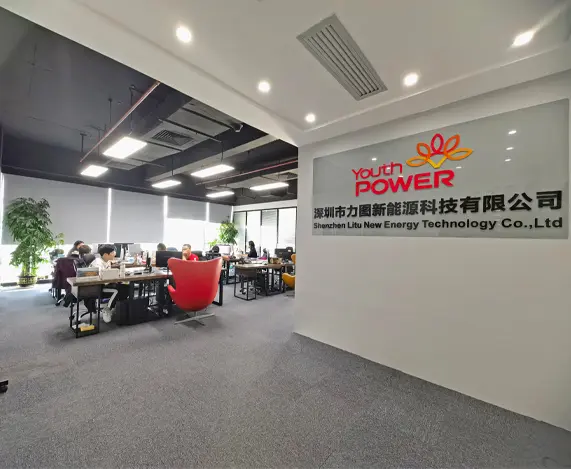
Founded in 2003, YouthPOWER has now become one of the leading suppliers of solar storage lithium batteries in the world. With a broad range of energy storage solutions, it covers a series of 24V, 48V and higher voltage lithium batteries solutions.
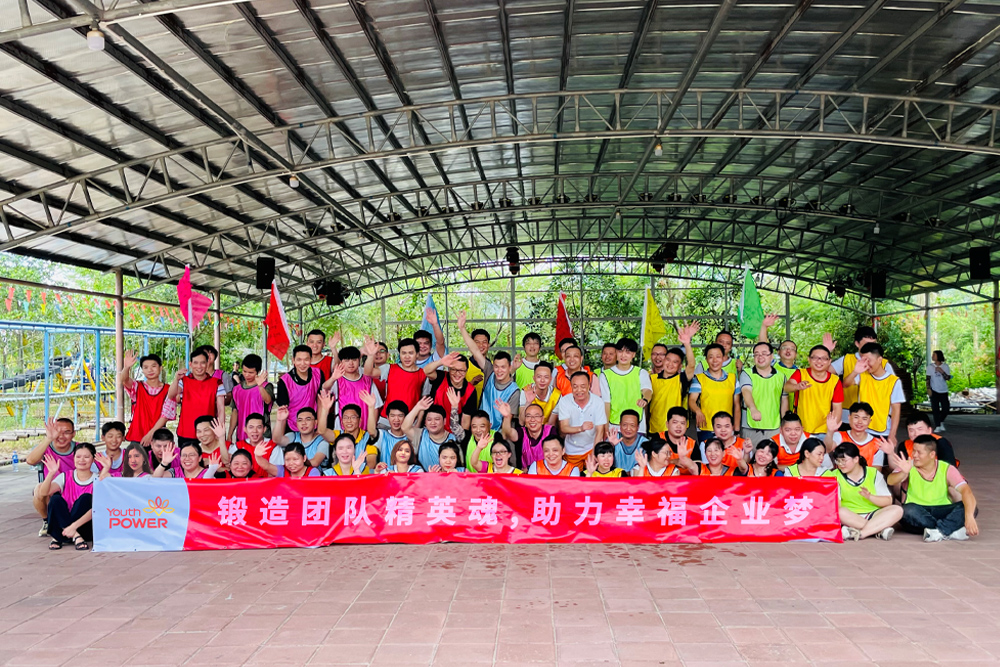
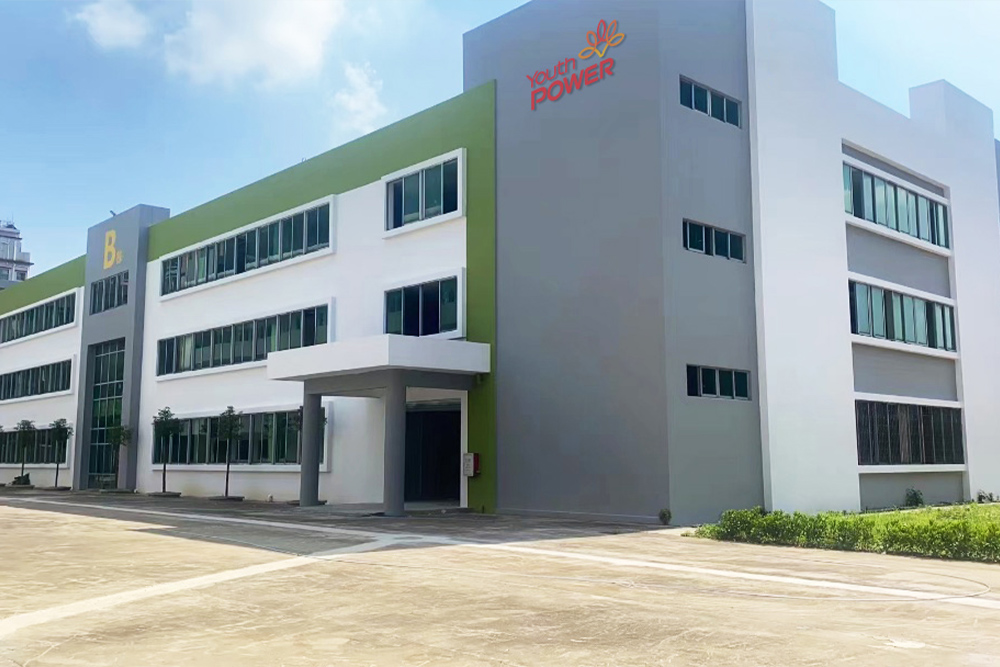
YouthPOWER has engaged in the battery technology and production for almost 20 years, with abundant manufacturing experience and strong new product R&D capability. Through many years of hard work and market promotion, we have created our own brand "YouthPOWER" in 2019.
With nearly 20 years' experience in the battery industry, we have the capability to provide you with both the products you need and the most suitable products you want. We are always ready to supply the first-class products and meet the various needs of the customers.
Twenty years of evolution, scaling global capacities to ensure deep grid independence.
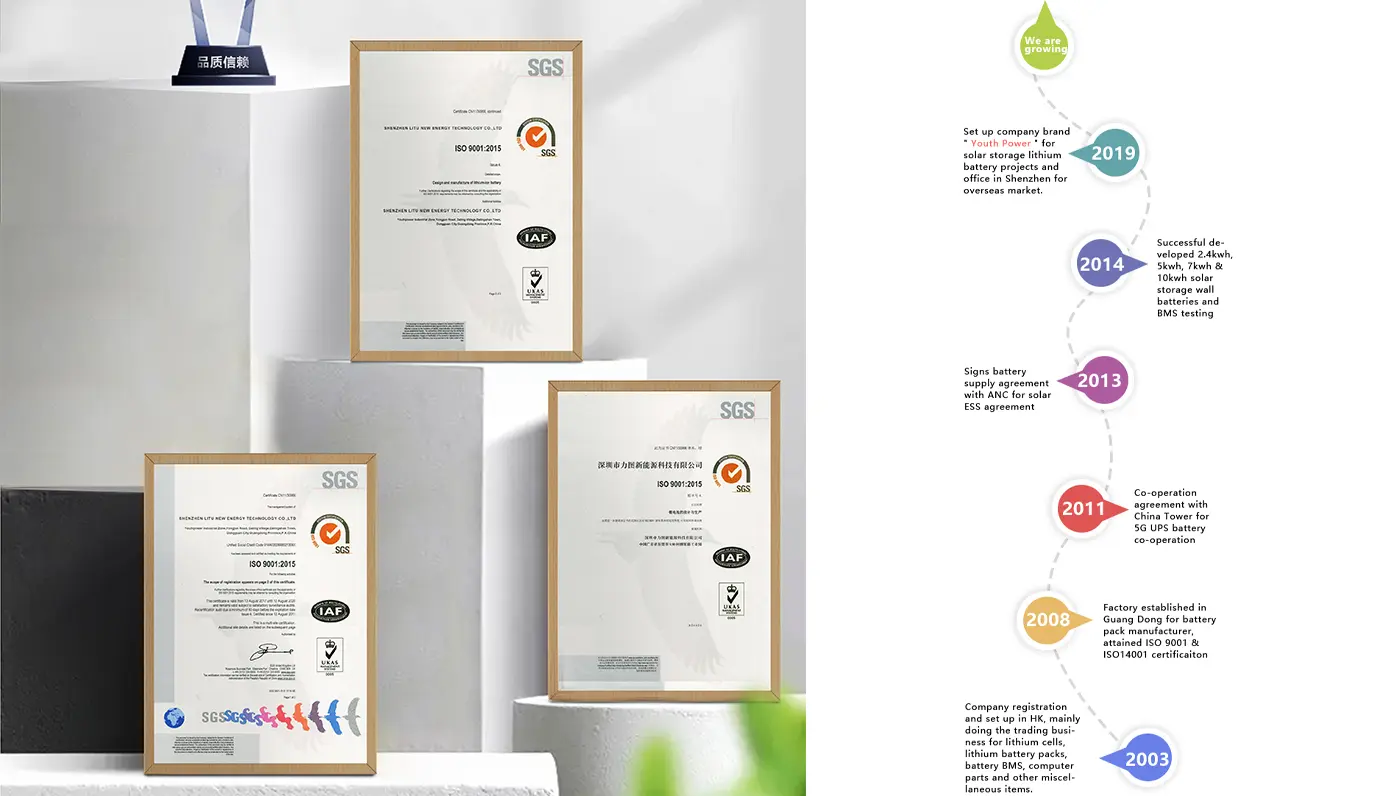
We have established good business relationships with our customers from all over the world. And we have a good cooperation with all our customers as well for many years running. Supported by our local vendors of raw materials, we can certainly offer you the best prices.
We are so proud that YouthPOWER has offered the reliable solar storage solution for over 1,000,000 families now in the world.
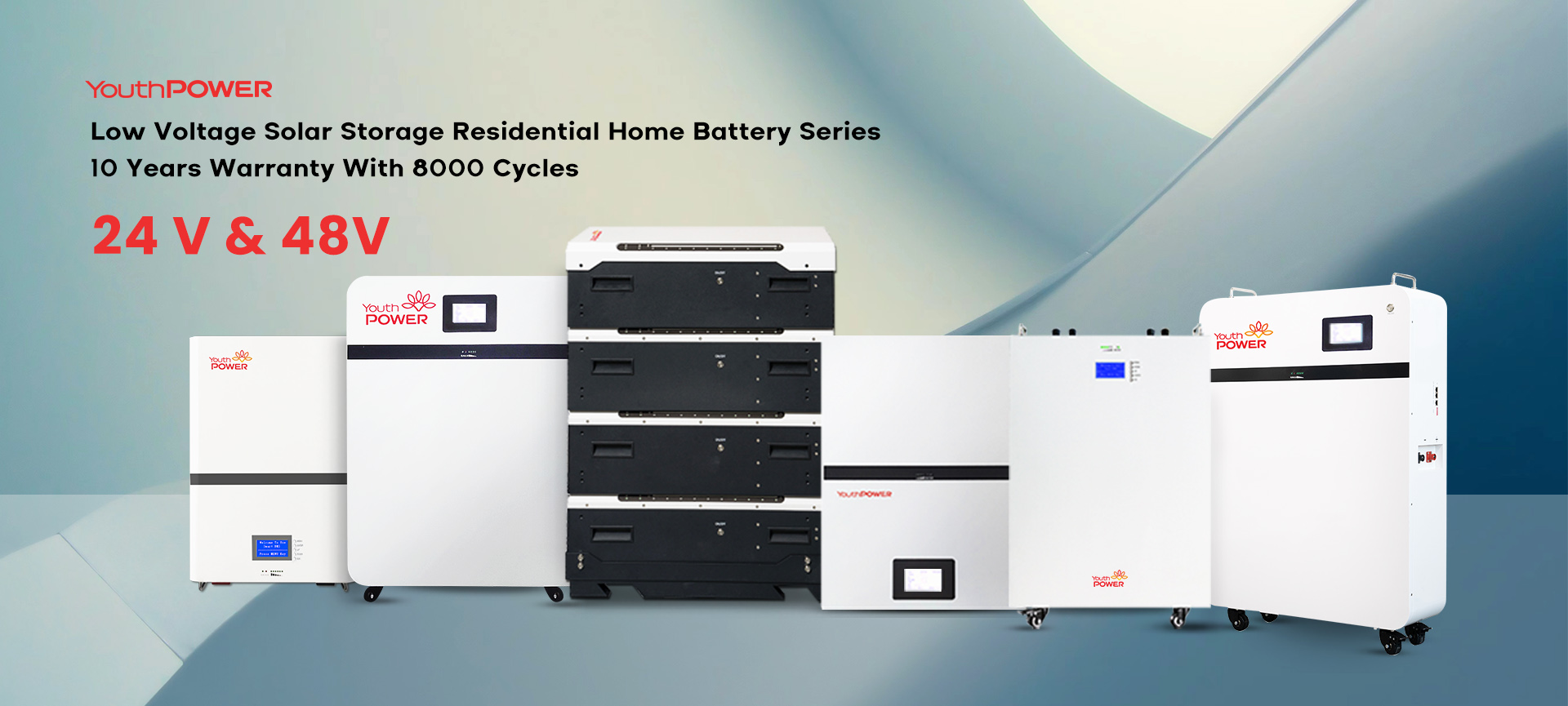
Integrating next-generation solid-state advances, cloud-controlled smart edge networks, and cobalt-free cathodes.
To sustain technological dominance, YouthPOWER continuously funds advanced materials research and solid-state cell packaging. Our long-term technical roadmap is systematically divided into three major architectural phases designed to scale current LFP efficiency metrics.
Integration of real-time cloud data telemetry. By deploying machine learning algorithm profiles to monitor voltage drift, cell temperature fluctuations, and impedance aging profiles, our batteries can dynamically predict maintenance anomalies before they manifest as operational failures.
By transitioning from liquid organic electrolytes to high-stability semi-solid-state matrix structures, YouthPOWER aims to increase system safety margins by eliminating risk pathways for cell leakage and subsequent ignition, while augmenting volumetric energy density by 20%.
Adopting Lithium Manganese Iron Phosphate (LMFP) blends to raise cell operational voltages from the standard nominal 3.2V up to 3.7V. This material evolution permits high nominal pack power outputs without altering external dimensional footprints.
Solving storage bottleneck limitations across modern shipping, intralogistics, off-grid telecom, and commercial grids.
Modern smart warehouses rely on Automated Guided Vehicles (AGVs) operating 24/7. YouthPOWER 24V lithium series supports rapid opportunity charging (up to 1C charge rates), enabling vehicles to charge during 15-minute shift breaks without memory degradation.
Remote cellular towers demand operational stability under wide ambient temperature boundaries (-20°C to +60°C). Our 24V lithium formulations yield robust cycle performance, slashing maintenance expenditures in hard-to-reach topographies.
Marine environments impose harsh corrosive atmospheres and structural vibration stresses. Built using IP65-rated enclosures and robust mechanical shock damping, our 24V battery architecture provides dependable energy storage for yacht accessories and solar components.
How localized raw material proximity and manufacturing automation allow YouthPOWER to control price inflation.
Securing battery supplies at stable market prices requires intensive integration. YouthPOWER controls costs by situating production centers within premium domestic electronics and battery raw-material ecosystems. This positioning provides direct access to high-grade lithium precursor chemicals, active anode materials, and advanced BMS copper circuits.
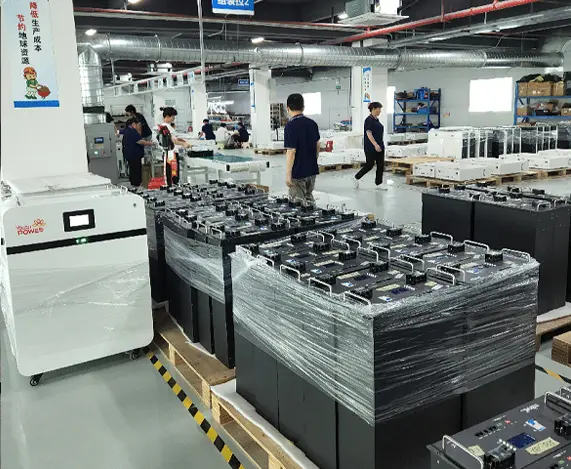
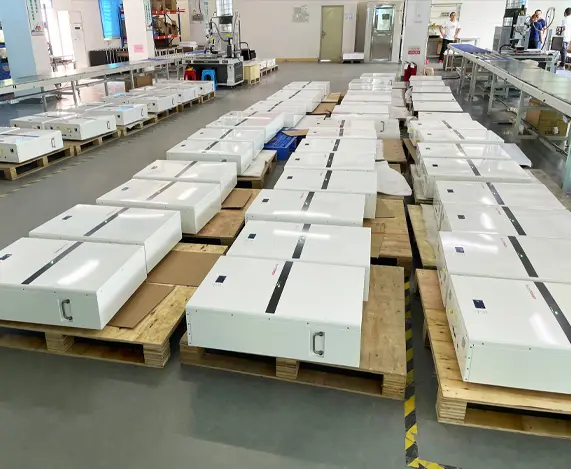
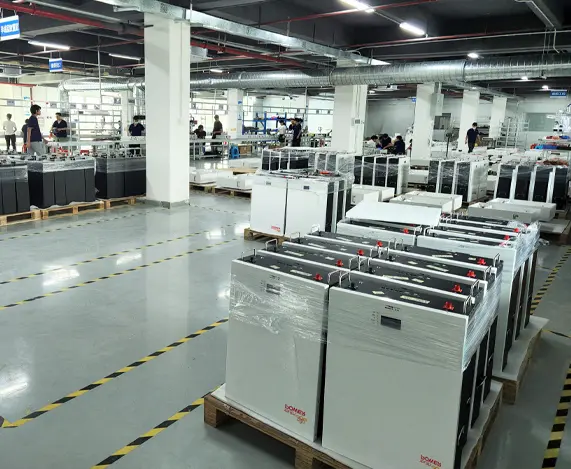
Human assembly inconsistencies are a primary source of battery failures. YouthPOWER employs high-speed automated laser-welding robotics and active pneumatic cell alignment systems. This high degree of precision lowers internal cell contact resistances and prevents premature array degradation.
Our Quality 4.0 assembly standard requires every single cell to undergo dynamic OCV (Open Circuit Voltage), IR (Internal Resistance), and volumetric capacity tests. Outliers are discarded immediately. This ensures that every pack displays uniform aging and delivers consistent output throughout its service life.
Close partnerships with lithium mining companies and refining plants shield our supply chain from commodity market swings. Consequently, we offer stable pricing structures and high delivery security to international procurement agencies.
Streamlining cross-border freight compliance and installation engineering services.
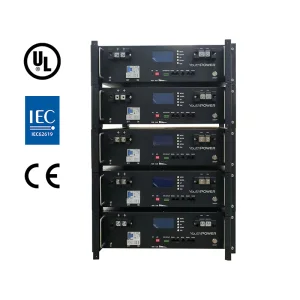
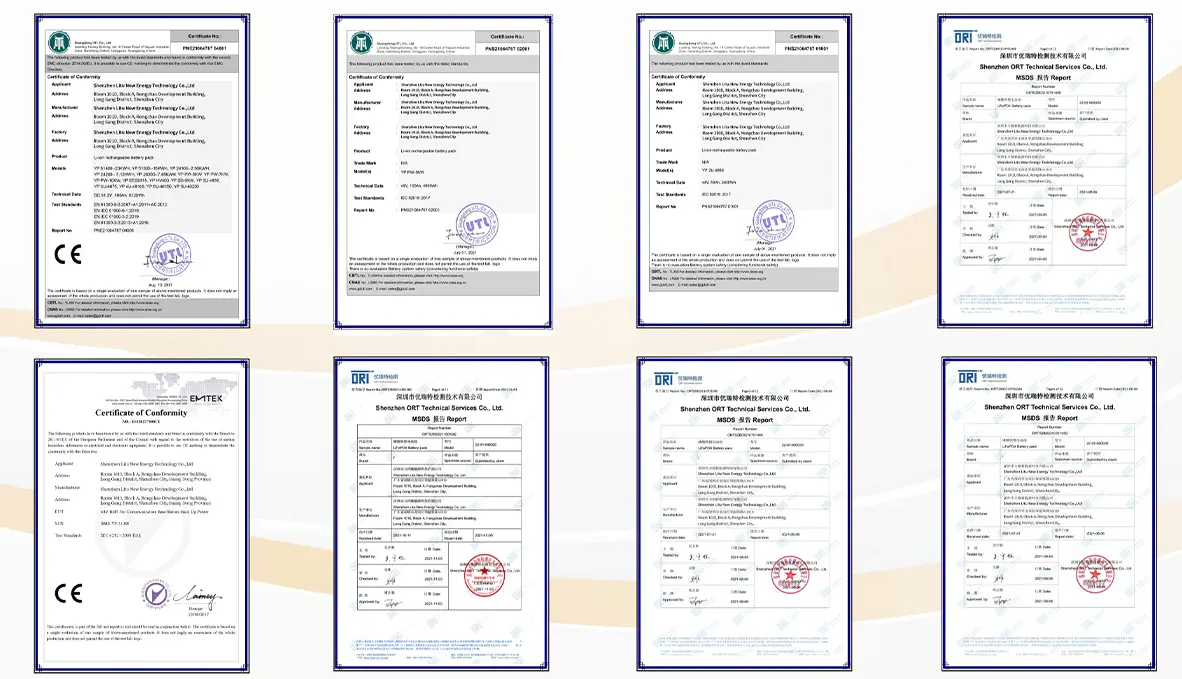
Lithium cells represent Class 9 Hazardous Goods during ocean and air transit. Comprehensive certification is essential to prevent costly customs detentions. YouthPOWER batteries carry complete legal compliance certifications, including UN38.3, UL1973, CE, IEC62619, and RoHS.
All production lots are verified under UN38.3 vibration, altitude, impact, thermal, and short-circuit testing protocols. This level of verification allows us to secure reliable dangerous goods shipping containers, reducing transit lead times for our clients.
Our Field Application Engineering (FAE) specialists provide design-in integration support for industrial equipment builders. We offer tailored advice on charger compatibility, parallel busbar calculations, and CANbus communication configurations.
Answering technical, safety, and logistical questions about 24V lithium battery platforms.
Complementary energy products built to the same strict manufacturing standards.
 YouthPOWER